Upgrade Your Electrical Panel in Richmond Hill — Built for Safety
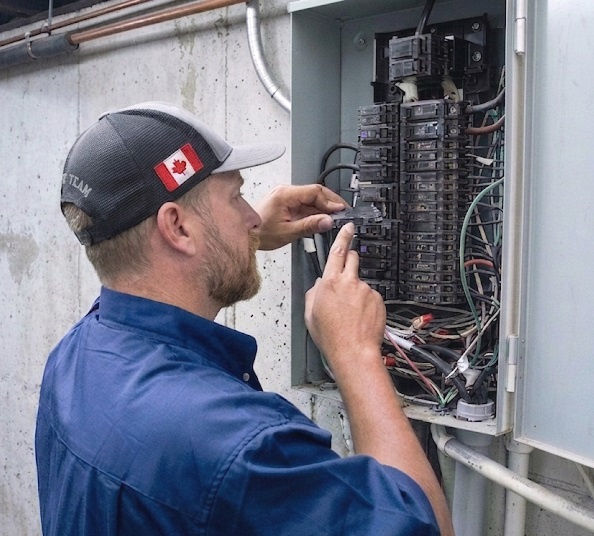




How It Works in 3 Easy Steps

Apply Online
Answer a few quick questions about your Electric Panel and home setup.


Get Matched with Pros
We’ll connect you with up to 3 verified, licensed installers in your area.

Compare & Hire
Review quotes, check credentials, and choose the installer that fits your needs.
Location
Reviews
Services
Service First Electric

Go Electrical Inc.
Moon Tech Electric

Canadian Expert Electricians

Nextphase Electric

Lia Electric Ltd

Service First Electric
Go Electrical Inc.
Moon Tech Electric
Canadian Expert Electricians
Nextphase Electric
Lia Electric Ltd

Electric Panel Upgrade Cost in Richmond Hill, ON: Complete Guide
Richmond Hill is one of York Region's largest and most established municipalities — a community that grew rapidly from a modest market town into a substantial city over the course of three to four decades of sustained residential development. That growth arc is directly readable in the electrical landscape. Richmond Hill's older heritage residential streets near Yonge Street, Mill Pond, and the original town core carry housing from the early twentieth century and the post-war era. The broad sweep of development through the 1980s and 1990s brought Richmond Hill's characteristic suburban fabric — Bayview Hill, Richvale, Oak Ridges, Crosby — predominantly on 100-amp builder service that is now 30 to 40 years old. And the newest development phases in Jefferson, Elgin Mills, and Rouge Woods have produced streets of newer homes on 200-amp builder service that is increasingly slot-constrained by EV charger installation and heat pump demand.
For Richmond Hill homeowners upgrading from 100-amp to 200-amp service, the full project — panel, breakers, labour, ESA permit, and utility coordination with Alectra Utilities (formerly PowerStream) — typically runs $2,400 to $4,200. Older heritage properties and Federal Pacific panel replacements run toward the upper end. Newer Richmond Hill homes on fully-loaded 200-amp builder service often need a subpanel addition as the practical first step for EV charger or heat pump circuit additions.
Quick Cost Snapshot: Richmond Hill Panel Upgrade Pricing (2026)
| Upgrade Type | Typical Cost in Richmond Hill | Notes |
|---|---|---|
| 100A → 200A (standard) | $2,400 – $4,200 | Panel, labour, ESA permit, Alectra coordination |
| Fuse box → 200A breakers | $2,300 – $5,200 | Oldest Richmond Hill town-core and heritage properties |
| Federal Pacific or Zinsco replacement | $2,500 – $4,600 | Present in Richmond Hill's 1965–1982 residential construction |
| Subpanel addition (loaded 200A) | $1,100 – $2,800 | Jefferson, Rouge Woods, Elgin Mills, newer developments |
| 200A → 400A service | $4,600 – $11,000+ | Larger homes, multi-EV, full electrification |
| Oak Ridges rural fringe (Hydro One) | Add $250 – $700 | Properties north of Oak Ridges Moraine on Hydro One service |
Richmond Hill utility note: Most of Richmond Hill is served by Alectra Utilities, formed from the 2017 merger that brought PowerStream (which had previously acquired Richmond Hill Hydro) together with other Ontario municipal utilities. The PowerStream service territory covered Richmond Hill, Vaughan, Thornhill, Barrie, and surrounding areas. A small number of properties on Richmond Hill's northern rural fringe — particularly in the Oak Ridges area near the Moraine — may be served by Hydro One rather than Alectra. Your electricity bill confirms which utility serves your address. For the vast majority of Richmond Hill residential addresses, Alectra manages the meter disconnect and reconnect for panel upgrade projects, typically within a few business days to one week.
8 Signs Your Richmond Hill Home Needs an Electrical Panel Upgrade
1. Your Richmond Hill home was built in the 1980s and hasn't had a panel assessment. Richmond Hill's 1980s development produced large numbers of homes on 100-amp builder service — panels now 35 to 45 years old. Hardware at this age warrants assessment as a proactive measure, regardless of whether there are obvious symptoms. Panels from the 1980s were sized for the electrical loads of the era, not for a household running air conditioning, an EV charger, a heat pump, and modern kitchen appliances simultaneously.
2. You have a Federal Pacific Stab-Lok or Zinsco panel. Both brands appear in Richmond Hill's 1965–1982 residential construction — the older town core properties and the earliest phases of suburban development. Ontario insurers flag both as priority replacements due to documented breaker failure modes under overload conditions.
3. Breakers trip under ordinary household loads. Consistent tripping when running the kitchen, laundry, and air conditioning simultaneously indicates the panel is being pushed to or beyond its limits under normal use. A professional load calculation is the right response.
4. Your newer Jefferson or Rouge Woods home has no open panel slots. Richmond Hill's 2000s and 2010s development used builder-standard 200-amp panels that were fully loaded at handover. Adding an EV charger circuit requires an open breaker slot — and if every slot is occupied, panel work comes before the charger can go in.
5. Lights dim noticeably when major appliances start. Visible voltage sag when the AC, refrigerator compressor, or other large loads start is a practical signal that a panel operating consistently near its capacity limits.
6. Your panel is warm or shows any discolouration around breakers. A same-day call. Panels should not produce perceptible heat on their exterior surfaces during normal operation. Warmth or discolouration near breaker positions is a condition requiring immediate professional assessment.
7. Your insurer raised the panel at renewal. Richmond Hill's 1980s housing stock — particularly properties with Federal Pacific panels — increasingly prompts insurer questions about electrical infrastructure at renewal. An insurer inquiry is a practical signal to schedule a professional assessment.
8. You're planning an EV charger and the electrician flagged the panel. Richmond Hill's EV adoption has grown rapidly alongside the rest of York Region. The EV charger consultation that reveals a panel issue is one of the most common entry points for panel upgrade conversations across the municipality's housing stock.
Types of Electrical Panels in Richmond Hill Homes
| Panel Size | Suitable For | Richmond Hill Context |
|---|---|---|
| 60 amps | Below Ontario minimum; not viable for modern loads | Oldest Richmond Hill town-core and heritage properties |
| 100 amps | Modest loads without AC, EV, or high-draw appliances | Dominant across Richmond Hill's 1970s–1990s suburban development |
| 200 amps | Standard modern household with EV and heat pump capacity | All 2000s-plus development; slot constraints common in newer stock |
| 400 amps | Larger homes, multi-EV, full electrification | Growing demand in Bayview Hill and larger Richmond Hill homes |
Richmond Hill's 1980s panel cohort: The homes built in Richmond Hill during the 1980s represent a significant proportion of the municipality's housing stock, and this cohort is now entering the active panel upgrade window in earnest. Panels at 35 to 45 years of age are not necessarily failing — but they were sized for loads that bear no resemblance to a modern household's electrical profile, and EV charger additions are pushing many of them past their practical capacity. Richmond Hill electricians working through this decade will be handling this cohort at high volume.
Electric Panel Upgrade Costs in Richmond Hill: The Full Breakdown
| Component | Cost Range (Richmond Hill) | Notes |
|---|---|---|
| 200A panel (Siemens, Schneider, Square D) | $450 – $950 | Adequate slot count prevents a second capacity constraint within a decade |
| Labour (4–6 hours) | $500 – $1,350 | Licensed Richmond Hill electricians: $85–$125/hr |
| ESA permit and inspection | $175 – $500 | Mandatory; filed before any work begins |
| Alectra coordination | $150 – $450 | Meter disconnect/reconnect scheduling |
| Grounding, bonding, service entrance | $250 – $750 | Code-required when service changes; 1980s properties often need attention here |
| Total: 100A → 200A | $2,400 – $4,200 | Standard Richmond Hill residential project |
How a Panel Upgrade Works in Richmond Hill: Step by Step
Richmond Hill Electrical Codes, Permits, and ESA Requirements
All electrical panel upgrades in Richmond Hill require an ESA permit filed by an ECRA/ESA-licensed electrical contractor before work begins. This is mandatory under the Ontario Electrical Safety Act — there is no homeowner self-permit pathway for service entrance work in Ontario. The permit triggers the post-installation ESA inspection, and the resulting certificate of inspection is your permanent documentation of code-compliant electrical work. Alectra maintains service entrance standards that your contractor must meet before the meter reconnect is approved. For Oak Ridges properties on Hydro One, the same ESA permit requirement applies, with Hydro One's disconnect process replacing Alectra's.
Incentives and Rebates for Panel Upgrades in Richmond Hill
The Canada Greener Homes Loan provides interest-free financing up to $40,000 for home energy upgrades including panel work tied to heat pump or EV charger installations — EnerGuide evaluations are required. Alectra Utilities offers customer efficiency programs for Richmond Hill residential customers; visit alectra.com for current program details. The Ontario Home Renovation Savings Program has offered rebates for electrification-enabling panel upgrades — check ontario.ca for current availability. York Region's sustainability initiatives and Richmond Hill's own environmental programs are worth checking alongside provincial and federal offerings.
Electrical Panel Upgrade Services in Richmond Hill
Areas We Serve in Richmond Hill
About Mill Pond
Mill Pond is Richmond Hill's historic core — the heritage neighbourhood centred on the Mill Pond itself and the old town streets surrounding it. Properties here include some of Richmond Hill's oldest housing, with a mix of heritage homes, Victorian-era and early twentieth century construction, and some mid-century development. The electrical infrastructure reflects the neighbourhood's long history, with varying degrees of update applied over many decades.
Panel Upgrades in Mill Pond
Mill Pond panel upgrade assessments need to account for the full electrical history of a property, not just the visible panel. Heritage construction often conceals older wiring, non-standard service entrance configurations, and grounding systems from multiple eras. A in-depth assessment — panel, service entrance, weatherhead, grounding — is the right starting point for any Mill Pond electrical project. The neighbourhood's heritage character and premium real estate values mean homeowners here invest in doing these things properly.
Key Upgrade Demand Drivers
Heritage property electrical age and complexity, renovation activity, insurance requirements on older properties, and EV charger demand from residents of one of Richmond Hill's most desirable historic neighbourhoods.
About Bayview Hill
Bayview Hill is one of Richmond Hill's most prestigious residential communities — a large planned neighbourhood developed primarily through the late 1980s and 1990s with larger homes on generous lots along Bayview Avenue and the hill topography east of it. The neighbourhood's affluent demographic and larger home sizes create electrical demand profiles that stand apart from standard Richmond Hill suburban development.
Panel Upgrades in Bayview Hill
Bayview Hill generates some of Richmond Hill's more wide-ranging panel upgrade discussions. Larger homes with multiple HVAC zones, strong EV adoption among the affluent demographic, and increasingly common multi-vehicle charging setups mean that load calculations here frequently indicate 200-amp service is at or near its practical limit — and the 400-amp service conversation comes up regularly. The neighbourhood's housing age (late 1980s–1990s, now 25–40 years old) also means the panels are approaching the point where hardware assessment alongside capacity review is appropriate.
Key Upgrade Demand Drivers
High EV adoption, multi-vehicle charging demand, large home base electrical loads, panel age on 1980s–1990s stock, and whole-home electrification planning in one of Richmond Hill's most affluent communities.
About Oak Ridges
Oak Ridges is a community in northern Richmond Hill, situated at the Oak Ridges Moraine — a location that gives it a more rural character than the rest of the municipality. The community has a mix of established residential development and newer construction, with some properties on the rural fringe served by Hydro One rather than Alectra. The Moraine setting and its proximity to Lake Wilcox give Oak Ridges a distinctive character within Richmond Hill.
Panel Upgrades in Oak Ridges
Oak Ridges panel upgrades vary by address. Properties in the established residential areas are on Alectra service with the standard Richmond Hill panel upgrade process. Properties on the rural fringe may be on Hydro One, with the associated scheduling lead time considerations. The community's mix of housing ages — from the 1980s–1990s established development to newer construction — generates both aging-infrastructure and slot-capacity upgrade demand.
Key Upgrade Demand Drivers
Panel age in established areas, EV charger demand, slot capacity constraints in newer development, and for rural-fringe properties, Hydro One coordination and rural service configuration considerations.
About Jefferson
Jefferson is a planned community in northeast Richmond Hill, developed primarily in the 2000s and 2010s with larger detached homes in a well-designed suburban setting. Jefferson represents Richmond Hill's newer residential development cohort — 200-amp builder service as standard, modern panel hardware in good condition, and a demographic with high EV ownership and electrification aspirations.
Panel Upgrades in Jefferson
Jefferson panel upgrade demand is almost entirely about capacity. Builder-standard 200-amp panels from the 2000s and 2010s are increasingly slot-constrained as residents add EV charger circuits, heat pump wiring, and additional loads to the original builder installation. Subpanel additions are the standard near-term solution, with the load calculation determining whether 200-amp total service capacity remains adequate or whether a service upgrade is the right long-term investment for households with extensive electrification plans.
Key Upgrade Demand Drivers
EV charger demand among younger professional families, heat pump installations, builder panel slot constraints, multi-vehicle EV planning, and rising interest in full home electrification.
About Richvale
Richvale is an established neighbourhood in central Richmond Hill, developed primarily through the 1970s and 1980s with a mix of detached and semi-detached homes. The neighbourhood's proximity to Yonge Street and its established community character have attracted consistent investment from long-term owners and newer buyers. The electrical profile reflects the 1970s–1980s construction era — predominantly 100-amp service now approaching 40 to 50 years of age.
Panel Upgrades in Richvale
Richvale is well into the active panel upgrade window for Richmond Hill's 1970s–1980s housing cohort. Federal Pacific panels are present in the earlier 1970s construction; 100-amp service is consistent across the neighbourhood. EV charger demand among homeowners who've invested in renovating Richvale's housing stock is the most common trigger for panel assessments, and the combination of panel age and new load demand creates consistent upgrade activity.
Key Upgrade Demand Drivers
Panel age, Federal Pacific concerns in the 1970s stock, EV charger demand, renovation activity among newer buyers, and insurance renewal pressure on aging electrical infrastructure.
About Crosby
Crosby is an established residential neighbourhood in south Richmond Hill, developed primarily through the 1970s and 1980s. The neighbourhood's housing stock reflects the builder standards of those decades — predominantly 100-amp service on panels now 35 to 50 years old. Crosby's proximity to Highway 7 and its established community character have made it a consistent destination for families looking for value within Richmond Hill.
Panel Upgrades in Crosby
Crosby carries Richmond Hill's characteristic 1970s–1980s panel upgrade profile — aging 100-amp service, some Federal Pacific presence in the older construction, and growing EV charger demand that is pushing panels sized for 1970s loads to their limits. The neighbourhood's active resale market and renovation activity create consistent panel upgrade demand from both long-term owners and newer buyers.
Key Upgrade Demand Drivers
Panel age, Federal Pacific concerns in the older 1970s stock, EV charger demand, renovation activity, and pre-sale electrical improvements in Richmond Hill's active resale market.
About Elgin Mills
Elgin Mills is a planned community in northwest Richmond Hill, developed primarily in the late 1990s and 2000s along the Elgin Mills Road corridor. The neighbourhood features larger detached homes with a family-oriented demographic that has shown strong EV adoption as the community has matured.
Panel Upgrades in Elgin Mills
Elgin Mills' housing from the late 1990s and 2000s is now 20 to 25 years old — in good hardware condition but increasingly facing the slot capacity constraints that affect Richmond Hill's newer suburban stock. EV charger demand among the neighbourhood's families is the primary driver of panel assessment requests, and subpanel additions are the common solution for homes where the original builder panel has no available circuit positions.
Key Upgrade Demand Drivers
EV charger demand, heat pump installations, builder panel slot constraints on 1990s–2000s development, and multi-vehicle EV planning among families in an established York Region community.
About Rouge Woods
Rouge Woods is a planned community in northeast Richmond Hill, developed primarily from the late 1990s through the 2010s in a natural setting adjacent to the Rouge River watershed. The neighbourhood combines a naturalistic character with planned suburban development and a demographic that has shown strong interest in sustainability and electrification.
Panel Upgrades in Rouge Woods
Rouge Woods panel upgrade demand reflects the neighbourhood's newer housing age — 200-amp builder panels in good hardware condition, but slot-constrained by the original installation as residents add EV charger circuits and heat pump wiring. The neighbourhood's environmental values and sustainability orientation contribute to particularly strong EV adoption and whole-home electrification interest, making Richmond Hill's Rouge Woods one of the more active areas for panel capacity planning conversations.
Key Upgrade Demand Drivers
Strong EV adoption among environmentally engaged families, heat pump installations, builder panel slot constraints, and whole-home electrification planning in one of Richmond Hill's most sustainability-oriented communities.
About Langstaff
Langstaff is a transitional community in south Richmond Hill straddling the boundary with Thornhill, centred on the Langstaff Road area. The neighbourhood has seen significant development and redevelopment activity as one of York Region's designated urban growth centres, with a mix of older residential stock and newer intensification development.
Panel Upgrades in Langstaff
Langstaff's transitional character produces varied panel upgrade situations — older residential properties with aging infrastructure alongside newer townhomes and condominium-adjacent development with slot-capacity challenges. The area's growth trajectory and active development make electrical capacity planning particularly relevant for homeowners and property investors in this community.
Key Upgrade Demand Drivers
Mixed housing age producing both aging-infrastructure and capacity-constraint upgrade needs, EV charger demand, renovation activity, and development-driven investment in electrical infrastructure across the neighbourhood.
Frequently Asked Questions: Panel Upgrades in Richmond Hill
Peace of Mind, Built In

Verified Installers
Every electrician is licensed, insured, and pre-screened — deal only with trusted pros.

Transparent Pricing
Compare up to 3 quotes side by side. No hidden fees, no surprises.

Fast Response Time
Get matched with local Richmond Hill electricians quickly so your upgrade gets scheduled sooner.

Trusted Reviews
See real homeowner feedback to help you choose with confidence.

Ready to Get Your Richmond Hill Panel Upgrade Quoted?
Whether you're replacing a Federal Pacific panel in a Richvale bungalow, adding a subpanel to a slot-constrained Jefferson home for EV charging, navigating the heritage electrical complexity of a Mill Pond property, planning a 400-amp service for a Bayview Hill estate with multi-vehicle EV charging, or sorting out an Oak Ridges rural-fringe property on Hydro One, EV Quotes connects you with licensed Richmond Hill electricians who know York Region's electrical landscape. Compare quotes, understand your options, and move forward with confidence.
Get a Free Panel Upgrade Quote in Richmond Hill