Best EV Chargers for BrightDrop Electric Vans in Canada

Author profile Written by EV Quotes   |   February 2026

BrightDrop electric vans are redefining how Canadian businesses move goods, manage logistics, and reduce operating costs. With powerful electric drivetrains, impressive payload capacity, and advanced fleet technology, BrightDrop vans are built for serious commercial use. To unlock their full potential, a reliable and efficient EV charging infrastructure is essential.

The innovative automaker currently offers the revolutionary 2025 BrightDrop 600 starting at $83,000 alongside the compact BrightDrop 400 starting at $73,000. Both models deliver strong commercial-grade performance through an advanced 800-volt architecture producing 300 horsepower and 389 lb-ft of torque, while achieving impressive driving ranges of up to 437 kilometers for the BrightDrop 600 and 402 kilometers for the BrightDrop 400, with efficiency optimized for commercial operations.

These groundbreaking vehicles are equipped with advanced battery systems and 11.5 kW onboard chargers that support rapid charging for fleet operations without compromising the cargo capacity and durability required by Canadian commercial operators. The brand is also integrating advanced fleet management technologies as it works to revolutionize commercial transportation across North America. BrightDrop is at the forefront of sustainable commercial electrification in the Canadian market.

EV Charger Levels Explained

Understanding EV charger levels helps BrightDrop fleet operators choose charging solutions that match vehicle battery capacity and daily operational demands. Selecting the right charger supports efficient scheduling, reduces downtime, and ensures BrightDrop electric vans remain ready for consistent commercial use across Canada.

BrightDrop electric vans are designed to support modern charging infrastructure, with charging options that range from basic household power to high-speed commercial solutions. Each level serves a different purpose, though not all are practical for daily fleet operations.

Level 1 Charging

Level 1 charging uses a standard 120V household outlet and represents the most basic form of EV charging. For BrightDrop electric vans, Level 1 charging provides approximately 3 to 4 miles of driving range per hour.

Given the BrightDrop 600 battery capacity of approximately 120 kWh and the BrightDrop 400 battery capacity of approximately 105 kWh, a full charge using Level 1 charging can take roughly 30 to 35 hours from empty. This extended charging time makes Level 1 charging unsuitable for regular commercial use.

Level 1 charging may serve a limited role in emergency situations or during extended parking periods when no other charging option is available. BrightDrop commercial vehicles are primarily designed for Level 2 charging and DC fast charging to support efficient fleet operations and minimize vehicle downtime.

Level 2 Charging

Level 2 charging operates on 240V power and is the most common and practical charging solution for BrightDrop electric van fleets. This charging level offers a strong balance of charging speed, reliability, and operational efficiency.

BrightDrop electric vans are equipped with an onboard charger rated at up to 11.5 kW. With Level 2 EV chargers, the BrightDrop 600 can reach a full charge in approximately 10 to 12 hours, while the BrightDrop 400 typically requires around 9 to 11 hours.

This charging speed makes Level 2 chargers ideal for overnight depot charging and scheduled fleet operations. Vans can recharge between shifts and be fully prepared for a full day of commercial use. Level 2 charging supports predictable workflows, lowers operational stress, and helps reduce total cost of ownership by maximizing vehicle availability.

Level 3 (DC Fast Charging)

Level 3 charging, commonly referred to as DC fast charging, delivers the fastest charging speeds available for BrightDrop electric vans. This charging method uses high-voltage direct current to deliver energy directly to the battery, bypassing the vehicle’s onboard charger.

BrightDrop electric vans support DC fast charging speeds of up to 120 kW. At this rate, the BrightDrop 600 can charge from approximately 10 percent to 80 percent in about 60 minutes, while the BrightDrop 400 can reach the same charge level in roughly 55 minutes.

DC fast charging is well suited for opportunity charging during active delivery routes or extended operating hours. It allows fleets to add significant driving range in a short period of time, supporting maximum vehicle uptime and operational flexibility. While DC fast charging is not typically used for daily overnight charging, it plays an important role in maintaining continuous service during demanding commercial schedules.

Choosing the Right Charger Level for BrightDrop Fleets

Most BrightDrop fleet operators rely on Level 2 charging as the foundation of their charging strategy, using DC fast charging to support high-demand routes or extended operational days. Level 1 charging remains a fallback option rather than a primary solution.

By understanding EV charger levels and aligning them with fleet needs, BrightDrop operators can build a charging strategy that supports efficiency, reliability, and long-term fleet performance.

Best Level 2 EV Charger for BrightDrop Electric Vans

For BrightDrop electric van operators seeking a reliable depot or facility-based charging solution, Level 2 chargers offer an effective balance of charging speed, installation practicality, and operational consistency. When professionally installed, these chargers are capable of utilizing BrightDrop’s 11.5 kW onboard charger capacity, supporting efficient overnight or scheduled charging that fits naturally into commercial fleet operations. This makes Level 2 charging a dependable option for operators who require predictable vehicle readiness, long-term equipment durability, and infrastructure suited to purpose-built electric commercial vehicles.

Emporia Classic

Emporia Classic

The Emporia Classic has earned recognition as an award-winning charging solution that delivers exceptional performance and value. This highly-rated charger combines reliable operation with advanced energy monitoring capabilities, allowing EV owners to track their charging costs and energy consumption with precision. The Emporia Classic's compact design, weather-resistant construction, and comprehensive smart features make it an excellent choice for homeowners seeking a balance of performance, technology, and affordability.

User Highlights for EV Owners:

  • Power Output: 11.5 kW (48A) 
  • Connector: J1772
  • Smart/App Features: Yes (energy monitoring, scheduling, cost tracking)
  • Installation Types: Hardwired only (professional installation)
  • Weather Rating: Excellent (NEMA 4, weather-resistant construction)
  • Warranty: 3 years (comprehensive coverage)
  • Price: $649-$699 (exceptional value for features)
  • Charging Time: 9-11 hours (0-100%), 52 minutes (50km range)
  • Special Feature: Award-winning performance with 4.9/5 expert rating

Installation Requirements

The Emporia Classic requires professional hardwired installation on a dedicated 60A circuit. This setup ensures safe operation, stable power delivery, and allows the charger to operate at its full 48A capacity, making it well-suited for permanent home or light commercial charging.

Why Choose the Emporia Classic

This charger is ideal for EV owners who want the best-rated Level 2 home EV charger with smart energy monitoring, reliable daily performance, and long-term value. It delivers the speed and consistency EV drivers expect, without the premium price tag.

ChargePoint Home Flex

ChargePoint Home Flex

The ChargePoint Home Flex stands out as the technology leader in home charging solutions, offering the most sophisticated app experience and smart features available in the market. This intelligent charging station provides comprehensive energy monitoring, flexible scheduling options, and seamless integration with utility demand response programs, allowing EV owners to optimize their charging costs while maintaining convenience. The Home Flex's superior cold-weather cable performance and robust build quality make it an excellent choice for Canadian installations, while its advanced connectivity features ensure you're always in control of your charging experience.

User Highlights for EV Owners:

  • Power Output: 12 kW (50A)
  • Connector: J1772 
  • Smart/App Features: Yes (industry-leading app, Alexa/Google integration)
  • Installation Types: Both plug-in (40A) and hardwired (50A) options
  • Weather Rating: Excellent (NEMA 4, superior cold-weather cable)
  • Warranty: 3 years (comprehensive coverage)
  • Price: $600-$700 CAD
  • Charging Time: 9-12 hours (0-100%), 50 minutes (50km range)

Installation Requirements

The ChargePoint Home Flex offers flexible installation to match different electrical setups. It can be installed as a plug-in unit using a NEMA 14-50 outlet or hardwired for higher, more consistent power delivery. Hardwired installation is recommended for GMC electric truck owners who want to maximize charging performance and long-term reliability.

Why Choose the ChargePoint Home Flex

This charger is ideal for EV owners who want one of the most advanced Level 2 home EV chargers on the market. It combines fast charging, superior cold-weather performance, and unmatched smart-charging features, making it an excellent choice for drivers who value control, convenience, and future-ready technology.

Tesla Universal Wall Connector

Tesla Universal Wall Connector

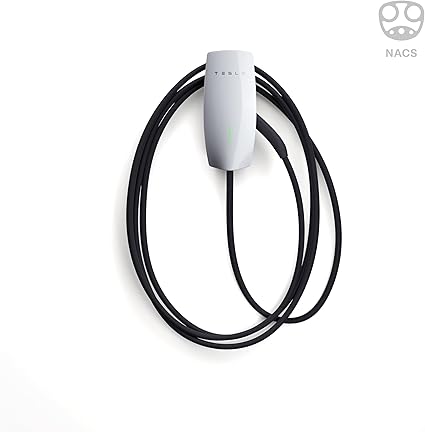
The Tesla Universal Wall Connector brings innovative design and future-proof compatibility to EV charging. Featuring Tesla's unique Magic Dock technology, this charger can accommodate both J1772 and NACS connectors without requiring separate adapters, making it an excellent choice for households with multiple electric vehicles or those planning for future EV purchases.

User Highlights for EV Owners:

  • Power Output: 11.5 kW (48A) 
  • Connector: J1772 & NACS (Magic Dock technology, future-proof)
  • Smart/App Features: Yes (Tesla app integration, scheduling)
  • Installation Types: Hardwired only (professional installation)
  • Weather Rating: Excellent (NEMA 4, all-weather performance)
  • Warranty: 4 years (extended coverage)
  • Price: $620-$850 CAD
  • Charging Time: 9-11 hours (0-100%), 52 minutes (50km range)
  • Special Feature: Tesla Supercharger access for EV starting June 2025

Installation Requirements

The Tesla Universal Wall Connector requires professional hardwired installation on a dedicated 60A circuit. This configuration ensures safe, consistent power delivery and allows the charger to operate at its full 48A capacity, making it suitable for high-capacity electric trucks.

Why Choose the Tesla Universal Wall Connector

This charger is ideal for EV owners who want a premium, future-ready Level 2 home EV charger. Its universal connector support, strong build quality, and long warranty make it an excellent long-term investment as North American charging standards continue to evolve.

Grizzl-E Classic and Smart

Grizzl-E Classic and Smart

The Grizzl-E series represents exceptional Canadian value engineering, offering reliable performance and quality construction at an attractive price point. Available in both Classic and Smart variants, these chargers provide EV owners with flexible options to match their budget and feature requirements. The Smart version adds WiFi connectivity and app control while maintaining the series' reputation for durability and reliability. Built to withstand harsh Canadian conditions and backed by excellent customer support, Grizzl-E chargers offer an ideal balance of performance, features, and value for cost-conscious EV enthusiasts.

User Highlights for EV Owners:

  • Power Output: 9.6 kW (40A) 
  • Connector: J1772 
  • Smart/App Features: No (Classic) / Yes (Smart version with WiFi)
  • Installation Types: Both plug-in and hardwired options available
  • Weather Rating: Excellent (NEMA 4, -30°C to 50°C Canadian tested)
  • Warranty: 3 years standard (5 years optional upgrade)
  • Price: $699-$1200 CAD (exceptional value)
  • Charging Time: 11-14 hours (0-100%), 62 minutes (50km range)

Installation Requirements

The Grizzl-E Classic offer flexible installation to suit different home electrical setups. Both can be installed using a NEMA 14-50 plug or hardwired for a more permanent solution. Hardwired installation is recommended for GMC electric truck owners seeking maximum durability and long-term reliability.

Why Choose Grizzl-E Classic

These chargers are ideal for EV owners who want a Canadian-made Level 2 EV charger built to handle extreme weather conditions. Whether you prefer the no-frills reliability of the Grizzl-E Classic or the added visibility of the Grizzl-E Smart, both models deliver dependable charging performance with strong long-term value.

Comprehensive Charger Comparison

 
Emporia Classic
ChargePoint Home Flex
Tesla Universal Wall connector
Grizzl-E Classic/Smart
Feature
Feature
Emporia Classic
ChargePoint Home Flex
Tesla Universal Wall connector
Grizzl-E Classic/Smart
EVQuotes Rating
EVQuotes Rating
4.9/5
4.7/5
4.6/5
4.5/5
Power Output
Power Output
3.8-11.5kW (16A/24A/32A/40A/48A)
3.8-12kW (16A/24A/32A/40A/48A/50A)
2.9-11.5kW (12A-48A adjustale)
3.8-9.6kW (16A/24A/32A/40A)
Max Power Charge Time for 50km
52 minutes
50 minutes
52 minutes
62 minutes
Connector
Connector
J1772
J1772
J1772 & NACS
J1772
Smart/App Features
Smart/App Features
Energy Monitoring Scheduling
Advanced App, Alexa/Google
Tesla App Integration
Basic (Smart: WiFi enabled)
Installation Types
Installation Types
Hardwired only
Plug-in or Hardwired
Hardwired only
Plug-in or Hardwired
Weather rating
Weather rating
NEMA 4 (weather resistant)
NEMA 4 (excellent cold weather)
NEMA 4 (all weather)
NEMA 4 (Canadian tested)
Warranty
Warranty
3 years
3 years
4 years
3 years (5 optional)
User Insights
User Insights
Award-winning Performance
Top App Experience
Stylish & Versatile
Affordable & Reliable
Price(CAD)
Price(CAD)
$649-$699
$600-$700
$620-$850
$699-$1200

Recommendations for BrightDrop EV Owners in Canada

For Highest Expert Rating and Best Value

The Emporia Classic earns our top recommendation with an exceptional 4.9/5 EVQuotes rating—the highest score among all tested chargers. At just $600 CAD, it delivers award-winning performance with 2-2.5 hour charge times for 100km of range, making it the perfect choice for BrightDrop operators who want proven excellence without premium pricing for their purpose-built commercial vehicles.

For Fastest Charging Performance

The ChargePoint Home Flex (4.7/5 EVQuotes rating) delivers the quickest charging performance at 2–2.5 hours for 100 km of range, supported by its industry-leading 12 kW maximum output that aligns closely with BrightDrop charging requirements. This makes it well suited for BrightDrop fleets with demanding operational schedules that require faster turnaround between shifts. Its advanced app experience adds convenience and control, supporting energy management and scheduling in commercial fleet environments.

For Future-Proof Design and Universal Compatibility

The Tesla Universal Wall Connector (4.6/5 EVQuotes rating) offers a forward-looking charging solution with support for both J1772 and NACS standards, helping BrightDrop businesses prepare for an evolving commercial charging landscape. It delivers 2–2.5 hour charge times for 100 km, combining efficient charging with a compact, modern design. This makes it a strong option for operators who value long-term compatibility across current and future electric vehicle platforms.

For Best Value Canadian-Made Quality

The Grizzl-E Classic and Grizzl-E Smart (4.5/5 EVQuotes rating) provide excellent value for budget-conscious BrightDrop operators, with 2.5–3 hour charge times for 100 km and pricing starting from $550. The Smart version adds connectivity features while maintaining affordability, allowing operators to choose between simplicity and added monitoring tools. Both models reflect durable, Canadian-made construction suited for commercial use without unnecessary cost escalation.

Interested, but not sure about the price? Request for a FREE Quote today

Not Ready for Level 2 Charging? Consider Level 1 Chargers

Level 2 charging is the recommended solution for BrightDrop electric vans, but Level 1 chargers can still serve a limited and supportive role. These chargers plug into a standard 120V household outlet and offer a simple, portable option when a Level 2 installation is not yet available. For BrightDrop vans with large battery capacities and commercial duty cycles, Level 1 charging is significantly slower and not intended for daily fleet operations.

Level 1 chargers are best used for emergency charging, maintaining battery charge during extended parking, or supplementing your primary charging setup while traveling for commercial operations. BrightDrop electric vans are designed primarily for Level 2 charging and DC fast charging, and each vehicle includes commercial-grade charging equipment to support efficient everyday use.

Get Level 1 EV Chargers for Emergency BrightDrop Charging Support.

 
Lectron Level 1 J 1772 (WiFi)
EVDance
Base Energy
Feature
Feature
Lectron Level 1 J 1772 (WiFi)
EVDance
Base Energy
Power Output
Power Output
120V, 12-16A, 1.4-1.9kW
120V/240V, 12-16A adjustable
120V, 12A, 1.4kW
Charge Time for 50km
5.3-7.1 hours
5.3-7.1 hours
7.1 hours
Key Features
Key Features
WiFi Enabled, App Control, Scheduling
Dual Voltage, portable, 25ft cable
UL Listed, reliable, 20ft cord
Price(CAD)
Price(CAD)
$200-$270
$120-$150
$130-$220
Best For
Best For
Smart Features & Convenience
Versatility & Travel
Maximum Reliability

Level 1 charging is best suited for BrightDrop electric van operators as a backup or emergency solution rather than a primary charging method. With the BrightDrop’s large battery capacity and 11.5 kW onboard charger designed for commercial use, a full charge using Level 1 power can take approximately 30 to 35 hours from empty, which does not support daily commercial operations. In limited scenarios, it can still help maintain battery charge during extended parking periods when faster charging options are not available.

For regular use, BrightDrop electric delivery van charging Ontario is best supported by Level 2 EV charging stations for BrightDrop vans, while DC fast chargers for Chevrolet BrightDrop fleet operations provide additional flexibility for high-demand routes and extended operating hours.

Installation Considerations for Canadian BrightDrop Owners

Proper installation plays a key role in getting the most value from your EV charging setup. For BrightDrop operators across Canada, planning ahead helps ensure safe operation, reliable charging performance, and long-term scalability for commercial use.

Key installation factors to consider include:

  • Electrical requirements: Most Level 2 EV chargers require a dedicated 240V circuit with amperage typically ranging from 40A to 60A, depending on charger output. A licensed electrician should always handle installation to meet Canadian electrical codes and protect charger and vehicle warranties.
  • Climate readiness: Canadian weather can impact charging equipment over time. Chargers with strong weather ratings are suitable for outdoor installation, but placing units away from direct ice and snow exposure helps extend equipment life and maintain consistent performance through winter conditions.
  • Electrical panel capacity: Older commercial facilities may require panel upgrades to support Level 2 charging. Evaluating available capacity before installation prevents delays and unexpected costs. Many provinces also offer rebates and incentives for commercial EV charger installation, helping reduce upfront investment for BrightDrop operations.

Future-Proofing Your BrightDrop Charging Setup

Planning ahead is essential when building a reliable charging strategy for BrightDrop electric vans. Choosing charging equipment that supports the BrightDrop 11.5 kW onboard charger and offers higher power capacity than current needs helps ensure strong performance today while remaining compatible with future commercial EVs entering the Canadian market.

Smart charging features also play an important role in long-term efficiency. Scheduling and energy monitoring tools allow operators to manage charging around time-of-use rates and evolving utility programs, while support for widely used connectors such as J1772 helps maintain compatibility as charging standards continue to develop across Canada.

Planning Reliable EV Charging for BrightDrop Electric Vans with EV Quotes

BrightDrop’s purpose-built electric vans are designed for commercial reliability, but consistent daily performance depends on having the right charging infrastructure in place. Through EV Quotes, Canadian operators can connect with certified electricians who assess site capacity, recommend suitable Level 2 charging solutions, and ensure installations meet electrical and safety requirements.

Modern EV charging systems are built to perform in Canadian conditions, offering weather-rated hardware and smart energy management features that support fleet efficiency. By working with qualified installers through EV Quotes, BrightDrop operators can plan charging setups that support vehicle uptime, cost control, and long-term scalability as commercial EV adoption continues to expand across Canada.

Get Your Free Quote Today to identify the most cost-effective BrightDrop charging setup.

Frequently Asked Questions

Using a Level 2 EV charger, the BrightDrop Zevo 600 reaches a full charge in roughly 10 to 12 hours, while the Zevo 400 takes about 9 to 11 hours. If utilizing DC fast charging at 120 kW, the BrightDrop charging time to go from 10% to 80% is approximately 60 minutes for the Zevo 600 and 55 minutes for the Zevo 400.

The BrightDrop Zevo 600 is equipped with a 20-module GM Ultium Lithium-Ion Battery. The specific Zevo 600 battery size is approximately 120 kWh. This capacity supports the vehicle's substantial range and operational capabilities, although range estimates can fluctuate based on climate control usage, terrain, and driving style.

Absolutely, you can charge a BrightDrop Zevo van at home. A Level 2 (240-volt) charger is recommended for efficient overnight charging, while a standard Level 1 (120-volt) outlet can be used for slower charging. Proper electrical installation is essential for safe and effective residential charging.

BrightDrop vans are compatible with the J1772 connector for AC charging. For DC fast charging, they utilize a CCS1 connector. This ensures CCS connector compatibility with standard public and commercial charging infrastructure. Additionally, the Tesla Universal Wall Connector features an integrated universal connector suitable for both Tesla and non-Tesla EVs like BrightDrop.

The BrightDrop Zevo 400 offers impressive driving capabilities for commercial fleets. Specifically, the BrightDrop Zevo 400 range can reach up to 402 kilometers (approximately 250 miles) on a full charge. However, actual range performance may vary depending on factors such as cargo load, driving conditions, and environmental temperatures.

Yes, cold weather impacts performance. Driving range may be lower due to higher energy usage, including energy spent heating the cabin. To maximize EV range in the Canadian winter, operators are advised to plug in the vehicle when temperatures are below 0°C (32°F). Preconditioning the battery and cabin while plugged in helps preserve range.

BrightDrop electric vans are capable of high-speed charging to minimize downtime. The BrightDrop max charge rate for DC fast charging supports speeds of up to 120 kW. This allows the battery to charge from 10% to 80% in approximately one hour, depending on the specific model and battery condition.

While specific costs for commercial applications can vary significantly based on site capacity and hardware, a standard residential EV charger installation typically ranges from $800 to $1,500. For business owners, it is important to note that these costs can increase if your facility’s electrical panel requires an upgrade, if the charging station is located far from the power source, or if trenching is necessary for outdoor wiring. To ensure accuracy and safety, we recommend obtaining a detailed quote from a verified electrician who can assess your specific site requirements.

Yes, an electrical permit is required in every Canadian province for a Level 2 EV charger installation. A licensed electrician will handle the entire permitting and inspection process, ensuring your installation is fully compliant with the Canadian Electrical Code and local regulations. This step is important for safety and rebate eligibility.

Yes, chargers with strong weather ratings are suitable for outdoor use. However, Canadian weather can impact equipment over time. To ensure the longevity of an outdoor-rated EV charger in Canada, it is recommended to place units away from direct ice and snow exposure to maintain consistent performance through winter conditions.

Yes, financial incentives exist to support electrification. Many provinces offer rebates for commercial EV charger installations, helping reduce upfront investment costs. Additionally, programs like ZEVIP funding for businesses may be available. Operators should check for specific provincial and federal incentives that apply to their BrightDrop fleet operations.

Older commercial facilities may require panel upgrades to support the load of Level 2 charging stations. Evaluating available electrical capacity before installation prevents delays. An electrical panel upgrade for EV fleet operations ensures your infrastructure can safely handle the simultaneous charging demands of multiple electric delivery vans.

Through EV Quotes, Canadian operators can connect with verified professionals. These experts assess site capacity and ensure installations meet all safety requirements. Finding certified EV charger installers near you involves using a service that connects you with licensed electricians who specialize in commercial EV charger installations for fleets.

For fleet applications, hardwired chargers are generally the superior choice. They offer higher power (48A-60A+) for faster, more reliable charging compared to plug-in models (32A-40A). This increased durability and safety make hardwired connections the recommended option for high-use commercial environments, ensuring your fleet is always ready.

Operators can use charging apps that offer energy monitoring features. A smart EV charger with energy monitoring allows you to track usage and manage charging around time-of-use rates. The BrightDrop Energy app specifically includes features to schedule charging and set target charge levels, helping optimize operational costs.

Yes, the Charging app enables setting a schedule for each day of the week. This allows scheduled charging for EV fleets to occur during off-peak times at a lower cost. Additionally, you can set specific charging times for your Home Charge Location to align with your electrical provider’s off-peak periods.

Most operators rely on Level 2 charging as the foundation of their strategy. An overnight depot charging strategy ensures vans are fully charged for daily routes. DC fast charging is typically used to support high-demand routes or extended operational days, while Level 1 charging serves as a fallback option rather than a primary solution.

Yes, BrightDrop electric vans, now branded as Chevrolet BrightDrop Zevo 400 and 600, are built on General Motors' Ultium Platform, which supports bidirectional charging capabilities. For more details on vehicle-to-grid technology for commercial fleets, refer to the official manufacturer specifications.

The provided text notes that it is important to charge the battery to 80% for daily use to promote battery health. While DC fast charging battery degradation is not explicitly detailed, the manual advises using Level 2 charging when possible to allow the battery to warm to optimal temperatures, suggesting it is better for long-term health.

Yes, multiple electric vans can share a single charging station, provided the hardware has dual ports and supports "simultaneous charging." In this configuration, the station splits the available power between the vehicles; for example, a 120kW charger would supply 60kW to each van. Many modern commercial units also include load management systems to distribute power intelligently. However, older or single-port units can only charge one vehicle at a time. To maximize efficiency, ensure your fleet's charging hardware supports simultaneous charging.

If a charger stops working or goes offline, check the charge port indicator lights. A red flash indicates a connection or power supply issue. For EV charger connectivity reliability, ensure the outlet is not hot, and connections are secure. If issues persist, the manual advises having the outlet serviced by a qualified electrician.

Several reputable brands are highlighted for commercial use. The Emporia Classic, ChargePoint Home Flex, Tesla Universal Wall Connector, and Grizzl-E are noted as top options. Selecting the best commercial EV charger brands depends on specific fleet needs, such as weather durability, smart features, and connector compatibility.

Yes, the Emporia Classic is listed as a compatible charger. It features a J1772 connector, ensuring Emporia charger BrightDrop compatibility. This charger is recognized for its value and smart features, making it a viable option for fleet operators looking for reliable Level 2 charging solutions.

The ChargePoint Home Flex is identified as a top charger option. While the name implies residential use, its high amperage and smart features make ChargePoint Home Flex for fleets a potential consideration for smaller commercial operations or depot charging, provided it meets the specific electrical requirements of the facility.

Yes, specifically the Tesla Universal Wall Connector. This unit features an integrated universal connector that works with both Tesla and non-Tesla EVs. This allows for charging non-Tesla EVs with a Tesla Wall Connector, making it a versatile choice for mixed fleets including BrightDrop vans.

Level 2 charging (AC) takes 9-12 hours and is ideal for overnight depot charging. Level 3 (DC Fast Charging) takes about one hour to reach 80%. Understanding Level 2 vs Level 3 charging for business helps operators balance installation costs with the need for rapid turnaround times during operational hours.

Using a smart charger offers significant advantages. Features like the BrightDrop Energy app allow for scheduled charging and energy monitoring, which differentiates a smart vs dumb EV charger for business. These tools help fleets take advantage of off-peak electricity rates and manage overall energy consumption effectively.

The Grizzl-E Classic and Smart chargers are listed among the top recommendations. They are known for robust construction, suitable for tough environments. While a specific Grizzl-E charger durability rating isn't provided, they are generally recognized for reliability, making them a strong candidate for commercial fleet applications in Canadian weather.

Charging speed fluctuates based on several EV charging speed factors, including battery temperature, outside air temperature, and the charge cord limit. Using a Level 1 cord or charging in extreme cold without preconditioning will result in slower charge times compared to using a high-power Level 2 station.

Yes, cable length is regulated for safety. When recharging at a DC charge station, the charging cable connected to the vehicle must be less than 10 meters (33 feet). This long cable EV charger for fleet requirements ensures the equipment meets functionality and regulatory safety standards during high-power charging.

EV charging station maintenance checklist generally includes periodically checking the electrical outlet and plug for heat or damage. If the outlet becomes hot, use should be discontinued immediately, and a qualified electrician should service the equipment.

A flashing red light on the charge port indicator signifies a problem. These EV charger fault codes usually point to a check the charge cord connection or a power supply issue. Operators should verify the cord is fully inserted and that the power source is functioning correctly.

No, do not use an extension cord. The manuals explicitly state to plug the charge cord directly into an electrical outlet. Using an extension cord violates EV charger extension cord safety protocols and can pose significant electrical hazards, potentially damaging the vehicle or charging equipment.

BrightDrop electric vans are equipped with large commercial-grade battery packs designed to last many years under regular use. Most modern EV batteries are engineered to retain strong performance for 8 to 10 years or more, depending on usage, charging habits, and operating conditions. Battery longevity is also supported by built-in thermal management and software controls that protect long-term health.

The 80/20 rule refers to keeping an EV battery charged between roughly 20 percent and 80 percent for daily use. Staying within this range helps reduce long-term battery wear and supports consistent performance. Many fleets follow this approach for routine charging while reserving full charges for longer routes.

If an EV runs out of charge, it will gradually reduce power and eventually stop, similar to running out of fuel in a gas vehicle. Drivers can contact roadside assistance to tow the vehicle to the nearest charging station. Some services also offer mobile charging support for short-range recovery.

Level 2 EV chargers are the most common charging solution for homes, workplaces, and fleet depots. They operate on 240V power and provide a practical balance of charging speed and installation cost. For commercial vehicles like BrightDrop vans, Level 2 chargers are the standard for daily charging.

Yes, modern EVs are designed to manage charging safely even when left plugged in for extended periods. Built-in systems prevent overcharging and regulate battery temperature. Using scheduled charging can further optimize energy use and costs.

Charging to 100 percent occasionally does not damage an EV battery, especially when needed for longer trips. However, keeping the battery at 100 percent for extended periods may increase long-term wear. For daily use, many operators prefer stopping below full charge.

Most EV manufacturers recommend avoiding frequent deep discharges below 10 to 20 percent. Charging before the battery gets too low helps maintain long-term battery health and reduces stress on the system. For fleets, predictable charging schedules help avoid low battery situations.

Stopping at 80 percent is commonly recommended for daily charging to support battery longevity. Charging to 90 percent offers additional range with minimal added wear and can be useful for longer routes. Many fleet operators adjust this limit based on daily driving needs.