Tesla EV Charger Installation Cost in Canada: What Homeowners Actually Pay in 2026
 Written by EV Quotes |
May 2026
Written by EV Quotes |
May 2026
- Tesla Wall Connector Installation in Canada: Why It's Not Just Plugging Something In
- Not Sure What Your Installation Will Cost?
- What the Tesla Universal Wall Connector Actually Costs in Canada
- Tesla Level 2 Charger Installation Cost in Canada: Real Numbers
- What Actually Drives the Price Up
- Charger Levels Explained
- Level 2 Charger Recommendations
- The Best EV Tesla Chargers: Level 2 Charger Recommendations
- Recommendations for Tesla EV Owners in Canada
- Not Ready for Level 2? Consider these Level 1 Chargers
- Installation Considerations for Canadian Tesla Owners
- Canadian Rebates and Incentives: What's Still Available in 2025–2026
- Future-Proofing Your Tesla Charging Setup
- Get 3 Free Quotes from Local Tesla Charger Installers
- Conclusion
If you've just picked up a Tesla Model 3, Model Y, or any other Tesla and you're trying to figure out what home charging is going to cost you, you're in the right place. The installation cost alone — not including the unit itself — breaks down roughly like this for Canadian homeowners: a simple install where the panel is ready and the charger is close to it runs $700 to $1,100; a more involved job with longer cable runs or trickier routing lands between $1,100 and $1,500; and if your panel needs upgrading, that electrical work alone can run $3,000 to $5,000. On top of that, the Tesla Universal Wall Connector itself is $785 CAD. Which bucket you fall into depends on your home's electrical setup, how far your parking is from the panel, and whether your existing service can handle the load — all things this guide walks through so you know what to expect before the first electrician shows up.
Tesla Wall Connector Installation in Canada: Why It's Not Just Plugging Something In
A lot of new Tesla owners assume home charging is like setting up a new appliance. It isn't. The Tesla Universal Wall Connector runs on 240 volts and can pull up to 48 amps continuously — that's a serious electrical load that needs its own dedicated circuit, a correctly sized breaker, and heavy-gauge copper wiring run back to your panel. Your provincial electrical authority requires a licensed electrician to do this work and pull the appropriate permit. If an installer offers to skip the permit to save you money, walk away.
Tesla itself recommends using a certified installer for Wall Connector installations, partly because the unit requires commissioning — the electrician needs to configure the amperage settings in the charger itself and verify communication with the Tesla app. It's not complicated, but it's a step many general electricians unfamiliar with EV chargers skip, and that can cause charging issues down the road.
Not Sure What Your Installation Will Cost?
Get 3 free quotes from verified, licensed EV charger installers near you. No obligation — just real numbers from local professionals who know Tesla installations.
Get 3 Free Quotes from Local InstallersWhat the Tesla Universal Wall Connector Actually Costs in Canada
Tesla currently sells the Universal Wall Connector through its Canadian website and through retailers like Best Buy for around $785 CAD (plus tax), though prices have shifted more than once over the past couple of years. Earlier in 2024, Tesla briefly dropped the Wall Connector to around $625 CAD before adjusting prices again, so it's worth checking Tesla's Canadian shop before you buy. Third-party resellers on platforms like Kijiji sometimes list new units in the $700–$950 range, and the occasional deal surfaces below list price.
The Universal Wall Connector replaced the standard Gen 3 Wall Connector as Tesla's main Canadian offering. The key difference is the integrated J1772 adapter, meaning it works for any North American EV — useful if you plan to add a second vehicle from a different brand down the road. Spec-wise, it delivers up to 11.5 kW at 48 amps on a 60-amp circuit, which is enough to add roughly 70–75 km of range per hour of charging on a Model 3 or Model Y. Tesla also recently launched a Remote Meter accessory for $285 CAD that enables Dynamic Power Management, which can let homes with older 100-amp panels avoid a costly service upgrade.
Tesla Level 2 Charger Installation Cost in Canada: Real Numbers
Electricians who specialize in EV installations quote a fairly consistent range once you understand what's driving the cost. Here's what actual installers are charging across Canada in 2025–2026:
| Scenario | Typical Low | Typical High | What's Included |
|---|---|---|---|
| Tesla Universal Wall Connector (unit only) | $785 | $950+ | Hardware only, before installation |
| Basic install (panel is ready, charger near panel) | $700 | $1,100 | Labour, breaker, short wire run, permit |
| Moderate install (longer cable run, some conduit) | $1,100 | $1,500 | Labour, materials, permit, commissioning |
| Complex install (detached garage, long run, trenching) | $2,500 | $3,500+ | Exterior conduit, underground trenching, or difficult routing |
| EVEMS load management system (avoids panel upgrade) | $1,000 | $1,500 | Added cost on top of basic install |
| Full panel upgrade (100A to 200A service) | $3,000 | $5,000+ | New panel, utility disconnect, electrical permit, meter base |
| Condo/multi-unit installation | $5,000 | $10,000+ | Board approval, sub-metering, longer runs from electrical room |
For most Canadian homeowners in a detached or semi-detached house with a 200-amp panel and an attached garage, the all-in cost — charger plus labour, materials, breaker, conduit, and permit — lands somewhere between $1,785 and $2,285. That's the realistic middle-of-the-road number you should budget for before getting quotes.
What Actually Drives the Price Up
The single biggest cost variable is your electrical panel. Many older Canadian homes still run on 100-amp service. Adding a 40–60-amp EV circuit to an already-loaded 100-amp panel isn't always safe without some kind of intervention. You have two options: a full service upgrade to 200 amps, which specialists price between $3,000 and $5,000 including the utility disconnect, new meter base, and electrical inspection; or an EVEMS (Electric Vehicle Energy Management System), a smart load manager that sits between your panel and the charger and adjusts charging speed in real time based on what else is running in your home. EVEMS typically adds $1,000–$1,500 to your project but can save you thousands compared to a full panel upgrade. Tesla's new Remote Meter accessory works on a similar principle and costs considerably less.
The second big variable is distance. If your electrical panel is in the basement and your parking is in an attached garage directly below, a short hardwired run is straightforward. If you're parking in a detached garage across the backyard, that's a different story — an underground conduit trench from the house to the garage adds significant labour and materials. Quotes for these setups can reach $3,500 or more before you've even accounted for any panel work.
Charger Levels Explained
Understanding the difference between charging levels matters when you're deciding what to install at home and what to expect on the road. Here's how they break down for Tesla owners in Canada.
Level 1 Charging:
Level 1 is your standard 120V household outlet — the kind you already have in every room. Every Tesla comes with a Mobile Connector that plugs straight into one of these, so you have something to use the day you get home. The problem is speed: you're looking at roughly 5–8 km of range added per hour. On a Model 3 with a 75 kWh battery, a full charge from empty takes over 50 hours. It's fine for top-ups if you drive short distances or rarely deplete the battery, but for most people it gets frustrating quickly. Think of it as a backup, not a strategy.
Level 2 Charging:
Level 2 is what most Tesla owners eventually install at home, and for good reason. Running on 240V with a dedicated circuit, it can fully charge a Model 3 overnight — typically 7–8 hours from near-empty to full. On a 60-amp circuit with the Wall Connector set to 48 amps, you're adding roughly 70–75 km of range per hour. For most people's daily driving habits, plugging in when you get home and waking up to a full battery becomes completely automatic. This is the setup this guide is primarily about.
Level 3 (DC Fast Charging):
DC Fast Charging bypasses the car's onboard charger entirely and pushes direct current straight into the battery at very high rates. Tesla's Supercharger network can deliver up to 250 kW on compatible V3 Superchargers, which puts 10–80% charge back in a Model 3 in roughly 25–30 minutes. This isn't something you install at home — it requires commercial-grade electrical infrastructure. But it's what makes long road trips across Canada genuinely practical.
Level 2 Charger Recommendations
The Tesla Universal Wall Connector is the natural first choice for most Canadian Tesla owners, but it's not your only option. Several well-regarded Level 2 chargers from other brands work perfectly well with Tesla vehicles using a NACS adapter and bring their own advantages — whether that's a stronger warranty, better cold-weather cable flexibility, or a more advanced app. Below are the four chargers we recommend most for Canadian Tesla owners based on real-world testing and expert reviews.
The Best EV Tesla Chargers: Level 2 Charger Recommendations
Based on expert ratings, real-world performance, and Canadian climate testing, these 4 chargers represent the best options for Tesla owners:
Comprehensive Charger Comparison



Recommendations for Tesla EV Owners in Canada
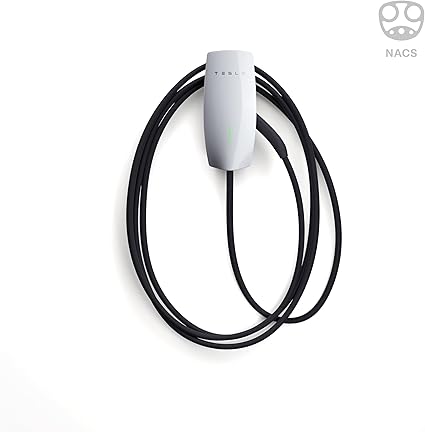
For Tesla owners who want the cleanest, most integrated experience, the Tesla Universal Wall Connector is the obvious pick. It's the only home charger that connects natively via NACS without needing an adapter, it fully utilizes the 11.5 kW onboard charger in every current Tesla model, and it ties directly into the Tesla app for scheduling, energy monitoring, and charging history. The Power Share feature is genuinely useful if you plan to add a second Tesla later — two Wall Connectors can share a single circuit and balance the load automatically. The design is minimal and understated in a way that suits Tesla's aesthetic, and the build quality has held up well in Canadian winters. It's not the cheapest option on this list, but for a Tesla-first household it's hard to argue with.
Tesla owners who put durability at the top of their list and want something made for Canadian conditions should take a hard look at the FLO Home X5. It's manufactured in Quebec, rated for -40°C to 50°C operation, and comes with the longest warranty in the category at five years. You'll need a J1772 to Tesla adapter since the FLO uses a standard connector, but the adapter is inexpensive and the charging experience is otherwise seamless. FLO's reputation in the Canadian EV space is well-established — they operate one of the country's largest public charging networks, and the same engineering philosophy carries through to their home hardware.
If you want the most feature-rich smart charging experience short of Tesla's own app integration, the ChargePoint Home Flex is worth considering. It maxes out Tesla's 11.5 kW onboard charger, handles amperage adjustments between 16 and 50 amps in the app, and offers some of the most detailed energy tracking and cost reporting available on a home charger. It also integrates with utility demand response programs, which can translate to real savings over time if your utility offers time-of-use pricing. Cold-weather cable performance is notably good, and the ChargePoint app connects to their broader public network for trip planning. Requires a J1772 adapter for Tesla.
The Emporia Classic earns its place on this list for delivering a genuinely impressive charging experience at a price point that's noticeably lower than the competition. It carries a 4.9/5 expert rating, provides full utilization of Tesla's charging capacity, and includes solid energy monitoring through the Emporia app. If you're working with a tighter budget but don't want to compromise on reliability or features, this is the one to look at first.
For owners who want something Canadian-made at a reasonable price with solid smart features, the Grizzl-E Smart hits a comfortable balance. WiFi connectivity, app control, and the option for either plug-in or hardwired installation give it flexibility for a range of home setups. The manufacturer offers an optional 5-year warranty extension, and the customer support reputation in Canada is consistently strong. If you've heard good things about the Classic Grizzl-E and want the connected version, this is it.
Not Ready for Level 2? Consider these Level 1 Chargers
Level 1 charging isn't the ideal long-term setup for most Tesla owners, but there are legitimate cases where it makes sense — a rental property where you can't control electrical infrastructure, a vacation home you visit a few days at a time, or simply as a bridge solution while you wait for an electrician to get to your installation. Every Tesla ships with a Mobile Connector that handles 120V out of the box, but the options below offer some quality-of-life improvements worth knowing about if you're going the Level 1 route for now.


Installation Considerations for Canadian Tesla Owners
A few things are worth knowing before you pick up the phone and call an electrician. First, the electrical permit is not optional — it's a legal requirement across Canada, and any installer who suggests skipping it to cut costs is not someone you want working on your electrical system. The permit protects you: it means the work gets inspected, and that inspection record matters when you sell the house or make an insurance claim.
Second, get at least two or three quotes. Installation pricing varies considerably across the country. Some installers will quote Level 2 installs starting around $450 in labour, while specialist EV installers in the same city quote $1,200 and up — and both figures can be justified depending on exactly what's included. Always ask for a written quote that breaks out labour, materials, permit fees, and whether the charger hardware is included or separate.
Third, if an installer tells you that you absolutely need a full panel upgrade, get a second opinion before committing. In many Canadian homes, an EVEMS load management system can get you to the same outcome at a fraction of the cost. Tesla's own Remote Meter accessory, launched recently at $285 CAD, achieves similar results specifically for Wall Connector installations by monitoring your panel's available capacity in real time and adjusting the charger's output accordingly.
Permit and Safety Note: All Level 2 EV charger installations across Canada require a permit and must be completed by a licensed electrical contractor. Always confirm your installer holds a valid provincial electrical licence before work begins. Reputable installers will include permit costs in their quote and provide you with the inspection certificate when the job is done.
Canadian Rebates and Incentives: What's Still Available in 2025–2026
The landscape for residential EV charger rebates varies by province. The federal ZEVIP program for individual homeowners has wound down, and some provincial programs have shifted their focus toward commercial and public charging infrastructure rather than private homes. As of early 2026, available rebates differ significantly depending on where you live — Quebec and BC have historically offered stronger residential incentives than Ontario, so it's worth checking your provincial utility and government websites before installation.
That said, there are avenues still worth checking regardless of your province. Many utilities offer time-of-use rate incentives for EV charging during off-peak hours, which compounds into meaningful savings over the life of your vehicle. If you own a small business, manage a condo building, or are installing charging for employees, programs through Natural Resources Canada and regional organizations may offer meaningful funding. For individual homeowners, asking your local utility provider about smart charging rate programs is the most practical first step.
Future-Proofing Your Tesla Charging Setup
One decision worth thinking through now is whether to run conduit for potential future expansion even if you're only installing one charger today. If you think there's any chance you'll add a second Tesla — or a second non-Tesla EV — having conduit in place makes running a second circuit dramatically cheaper than opening walls again later. Tesla's Wall Connector Power Share feature already supports this scenario, allowing up to six Wall Connectors to share a single circuit intelligently, but you'll still want the electrical infrastructure in place to support whatever load you eventually need.
The transition to NACS as the North American standard is also worth factoring in. Tesla opened its Supercharger network and connector standard to other manufacturers, and the Universal Wall Connector's built-in J1772 adapter means it can charge virtually any current EV sold in North America. If your household ends up with mixed EVs over the next decade, that universal compatibility becomes practical rather than just a nice-to-have.
Get 3 Free Quotes from Local Tesla Charger Installers
Don't overpay for your installation. Compare quotes from verified, licensed electricians near you who have hands-on experience with Tesla Wall Connector installs.
Get 3 Free Quotes from Local Installers
Conclusion
Installing a home charger is one of the best decisions you'll make as a Tesla owner — the convenience of waking up to a full battery every morning genuinely changes how you use the car. The cost is real, but it's manageable when you understand what you're actually paying for. Budget honestly, get multiple written quotes from licensed electricians, confirm the permit is included, and don't let anyone talk you into skipping commissioning on the Wall Connector itself.
For most Canadian homeowners, the Tesla Universal Wall Connector on a 60-amp circuit, professionally installed and permitted, is the right long-term setup. It fully utilizes your car's onboard charger, integrates cleanly with the Tesla app, and is built to handle Canadian winters without complaint. The other chargers on our list — the ChargePoint Home Flex, Emporia Classic, FLO Home X5, and Grizzl-E Smart — are all worth considering depending on your priorities, and any of them will serve you well for years. The key is getting the installation done right the first time by someone who knows what they're doing.
Frequently Asked Questions
Installation costs in the GTA depend on your home's electrical setup. A simple install where the panel is ready and the charger location is close to it runs $700–$1,100 in labour and materials. More complex jobs with longer cable runs or trickier routing land between $1,100 and $1,500. If your panel needs upgrading, that electrical work alone can cost $3,000–$5,000. The Tesla Universal Wall Connector unit itself is $785 CAD, purchased separately from the installation.
No. Tesla sells the Universal Wall Connector hardware through its Canadian website and recommends certified installers, but the installation work and cost are entirely separate. You arrange and pay for the licensed electrician directly. Tesla does provide a tool on its website to help you find certified installers in your area.
The Tesla Universal Wall Connector is Tesla's recommended home Level 2 charger. It delivers up to 11.5 kW at 48 amps on a 60-amp circuit, adding roughly 70–75 km of range per hour. It's compatible with all North American EVs thanks to a built-in J1772 adapter, and it connects to the Tesla app for scheduling, monitoring, and over-the-air updates. In Canada, it's priced at $785 CAD from Tesla's website.
Yes. To get the full 48-amp output from the Universal Wall Connector, you need a 60-amp dedicated breaker — the Canadian and US electrical codes require EV chargers to run at no more than 80% of the breaker's capacity on a continuous load. A 50-amp breaker limits output to 40 amps, and a 40-amp breaker caps it at 32 amps. For most overnight home charging the difference in time is modest, but a 60-amp circuit is the right long-term choice.
Not necessarily. Many GTA electricians who specialize in EV installs offer an EVEMS (Electric Vehicle Energy Management System) as an alternative to a full service upgrade. This smart load manager monitors your home's power usage in real time and throttles the charger's output to prevent overload. Tesla's own Remote Meter accessory ($285 CAD) works on a similar principle. A full panel upgrade in the GTA runs $3,500–$5,000; an EVEMS typically adds $1,000–$1,500 to your install. Always get a second opinion before committing to the full upgrade.
A straightforward installation — panel is ready, charger location is close, no unusual routing — takes most experienced electricians three to five hours. Add panel work, long conduit runs, or underground trenching for a detached garage and you're looking at a full day or potentially two. The ESA inspection is scheduled separately and typically happens within a few days of the work being completed.
Yes, it's a legal requirement in Ontario. All Level 2 EV charger installations must be performed by a licensed electrical contractor who pulls the appropriate ESA permit. The installation is then inspected and you receive a Certificate of Compliance. Any installer who suggests skipping the permit to save money is not someone you want working on your electrical system — unpermitted work can void your home insurance and create problems when you sell the house.
Yes. The Tesla Universal Wall Connector is rated for both indoor and outdoor installation. For outdoor mounting, the wiring must be rated for outdoor use and run through weather-rated conduit. The charger itself is designed to handle Canadian weather, though locating it in a covered or sheltered spot — under an eave or in a garage — is always preferable for long-term durability and cable flexibility in extreme cold.
Yes, but it involves more steps than a house. You'll need approval from your condo board or property management, and the building's electrical infrastructure may require a sub-panel or load management system. Condo EV installations in Toronto typically cost $5,000–$10,000 or more depending on the building's age and how far your parking spot is from the electrical room. Start with your property management office and get an electrician's assessment before assuming it's not feasible.
Every Tesla comes with a Mobile Connector, which plugs into a standard 120V household outlet and adds roughly 5–8 km of range per hour. This is a Level 1 charger and serves as a basic backup. The Tesla Universal Wall Connector is a separate purchase ($785 CAD) and requires professional installation — it's not included with the vehicle but is strongly recommended for anyone who wants practical daily home charging.
Either can legally do the work in Ontario, but there are meaningful practical differences. Tesla-certified installers are trained specifically on Wall Connector commissioning — configuring the amperage settings and verifying app connectivity — and are familiar with common installation scenarios for Tesla vehicles. Independent electricians often cost less but may need more guidance on Tesla-specific setup steps. For straightforward installs, a good local electrician is fine. For complex setups or if you want the Tesla app integration configured properly from the start, a certified installer is worth the call.
On a 60-amp circuit with the Universal Wall Connector running at its full 48-amp output, you'll add roughly 70–75 km of range per hour. A Model 3 Long Range starting from nearly empty would be fully charged in about 8–9 hours — comfortably overnight for the vast majority of drivers. On a 40-amp circuit the speed drops to around 55–60 km per hour, and on a 32-amp circuit it's around 45 km per hour. For comparison, a standard 120V outlet adds only 5–8 km per hour.
You can't literally share a single connector simultaneously, but Tesla's Power Share feature lets you link up to six Wall Connectors on a single circuit and have them automatically balance the available power between vehicles. So if you install two Wall Connectors on one 60-amp circuit, each car gets 24 amps when both are plugged in, and the full 48 amps when only one is charging. This is a practical and cost-effective solution for two-Tesla households that avoids running two separate circuits.
Significantly cheaper. Home charging in Ontario using off-peak hydro rates (typically overnight) costs roughly $0.087–$0.113 per kWh depending on your utility and time of use. A full charge on a Model 3 Long Range (75 kWh) costs roughly $7–$9 at home. Tesla Supercharger rates in Canada typically run $0.35–$0.48 per kWh, making the same charge $26–$36. Over a year of regular driving, home charging can save $1,500–$2,500 compared to relying primarily on Superchargers.
The landscape has thinned out for single-family homeowners specifically. Ontario's ZEVIP residential rebate program has been paused as of early 2025, and there is currently no active provincial rebate covering a standard home Wall Connector installation in the GTA. The most practical step for homeowners is to check whether your local utility offers time-of-use rate incentives for EV charging during off-peak hours. For condo buildings, workplaces, and businesses, the Atmospheric Fund's EV Station Fund and federal programs through Natural Resources Canada still offer meaningful funding — worth exploring if you manage a multi-unit property.
For a 60-amp circuit (the most common for full Wall Connector output), your electrician will use 6-gauge copper wire at minimum — and many will specify 4-gauge for longer runs to manage voltage drop over distance. For a 40-amp circuit, 8-gauge is sufficient for shorter runs. Your electrician will calculate the correct gauge based on the actual distance from your panel to the charger location. Never allow an installer to use undersized wire to cut costs; it's a fire risk and will fail inspection.
Yes, and it's a common alternative — particularly for homeowners who want flexibility or who are renting. A NEMA 14-50 outlet on a 50-amp circuit lets you use Tesla's Mobile Connector with a 14-50 adapter and charge at around 37–40 km of range per hour. The outlet itself is cheaper than the Wall Connector and can be used by any EV with the right adapter. The tradeoff is lower maximum charging speed, no app integration, and no over-the-air updates. For many drivers the speed is perfectly adequate for overnight charging.
Tesla's Canadian website has a Find a Certified Installer tool — enter your postal code and it returns nearby certified installers who can provide quotes. It's worth getting at least two or three written quotes before committing, as prices across the GTA vary considerably even for identical-scope installations. You can also find licensed electricians through the Electrical Safety Authority's contractor directory at esasafe.com, which lets you verify an electrician's ESA license before hiring.
A proper quote for a Tesla Wall Connector installation should separately itemize: labour, materials (wire, conduit, breaker, mounting hardware), the ESA permit fee, and any panel work if required. It should also clearly state whether the Wall Connector unit itself is included or whether you're purchasing it separately. Be cautious of quotes that lump everything into a single number with no breakdown — that makes it difficult to compare between installers or to understand what you're actually paying for.
There's growing evidence that EV charging infrastructure is becoming a selling point in Canadian real estate, particularly in the GTA where EV adoption is relatively high. A permitted, professionally installed Level 2 charger with a dedicated circuit is a tangible feature that appeals to the increasing number of buyers who own or plan to own an EV. The permit documentation is important here — a permitted install is verifiable and transferable; unpermitted work raises flags during home inspections and can complicate a sale.