Top-Rated Home EV Chargers for Jaguar Owners in Canada

Author profile Written by EV Quotes   |   February 2026

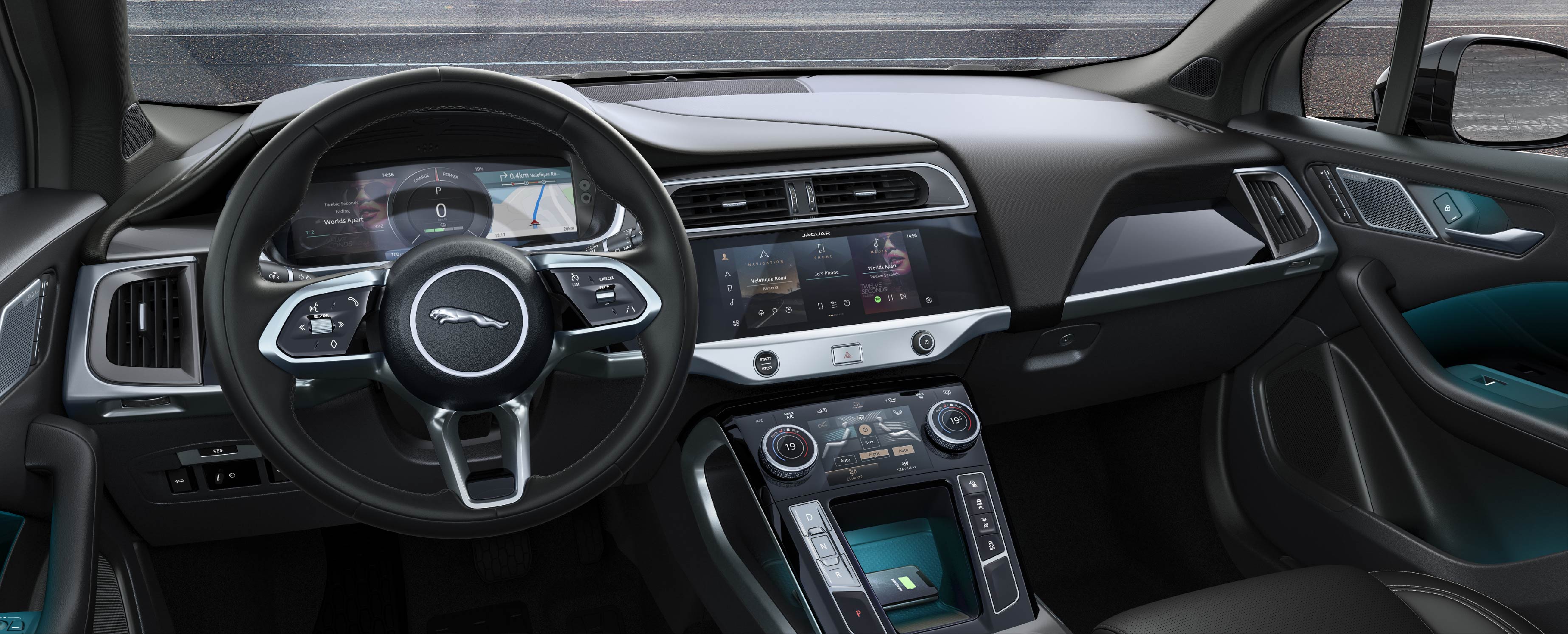
Jaguar has firmly positioned itself as a leader in the luxury electric vehicle space with the award-winning I-PACE. This all-electric SUV showcases the brand's commitment to blending its legendary performance and sophistication with sustainable, zero-emissions technology. The I-PACE R-Dynamic HSE, with its 90 kWh battery and 377 km range, showcases Jaguar's engineering for Canadian drivers. Its 11 kW onboard charger ensures efficient home charging, keeping your luxury EV ready for the road.

As Jaguar moves towards an all-electric future by 2027, the I-PACE sets the tone, even as production ends. The brand is gearing up to launch three new electric models that redefine luxury and performance. For Jaguar owners, installing a Level 2 EV charger at home is the easiest and most cost-effective way to embrace electric driving. A home EV charging station offers overnight charging, lower costs than public chargers, and unmatched convenience for daily driving in Canada.

Jaguar's Electrified Journey: I-PACE and Beyond

Current Offering: The I-PACE


The Jaguar I-PACE marks a major milestone, proving that electric performance can pair with the luxury Jaguar is known for. This pure Battery Electric Vehicle (BEV) is built to deliver an exhilarating drive with two Jaguar-designed electric motors providing all-wheel drive, instant acceleration, and impressive power.

At the heart of the I-PACE is a 90 kWh battery, offering an official range of up to 377 km. It uses an 11 kW onboard charger for efficient home charging. For AC charging, the I-PACE uses the universal SAE J1772 connector, compatible with standard North American chargers. It also supports DC fast charging via the Combined Charging System (CCS) for quick top-ups. This combination of range, power, and charging flexibility makes the I-PACE a compelling option for Canadian drivers seeking a premium EV experience.

Upcoming Electric Models


Jaguar is set to redefine its brand identity with an ambitious plan to become an all-electric luxury automaker by 2027. This transition will be spearheaded by the launch of three new electric vehicles built on a single, state-of-the-art platform known as the Jaguar Electrified Architecture (JEA). These models will mark a departure from the I-PACE, moving further upmarket to compete in the ultra-luxury segment.

These upcoming models are poised to deliver exceptional performance, cutting-edge technology, and a design language that signals a new era for Jaguar. For the Canadian market, this means access to a new portfolio of exclusive, high-performance electric vehicles designed for discerning buyers.

The new platform will undoubtedly support advanced fast-charging capabilities and feature larger batteries, strengthening the importance of having a robust home charging solution ready to accommodate the next generation of Jaguar's electric lineup.

Why Plan Your Jaguar Home Charging Station Now

Installing a dedicated home charger for your Jaguar isn't just convenient. It's an investment in your electric future. As Jaguar's EV lineup grows, a Level 2 charger prepares you for your current I-PACE and upcoming models. This adds lasting value to your property and ensures you're ready for what's next.

Furthermore, Canadian homeowners can take advantage of various government rebates and incentives designed to offset the cost of purchasing and installing an EV charger. Programs at the federal, provincial, and municipal levels can significantly reduce your initial investment.

Over time, charging at home is much cheaper than using public charging networks or buying gas, saving you a lot on transportation costs. Best of all, you get the convenience of waking up to a fully charged car every morning, making your daily commute effortless.

Understanding Charger Levels for Jaguar EVs

Choosing the right charging solution is key to getting the most out of your Jaguar EV. There are three main charging levels, each with different speeds and installation requirements.

Level 1 Charging: Basic and Accessible

Level 1 charging is the most basic method, using a standard 120V household outlet. Most electric vehicles, including the Jaguar I-PACE, come with a Level 1 charging cable. This method requires no special installation; you simply plug it into any grounded wall socket. However, it is also the slowest option, adding only about 5-7 kilometers of range per hour of charging. For the I-PACE's large 90 kWh battery, a full charge could take over 60 hours. This makes it impractical for daily use, but it can be a useful backup or overnight top-up if you have a very short commute.

Key Benefits:

  • No installation costs required.
  • Uses any standard 120V outlet.
  • Portable and easy to use anywhere.
  • Good for emergency or supplemental charging.

Level 2 Charging: Faster and Practical for Home

Level 2 charging is the recommended and most practical solution for home use. It operates on a 240V circuit, similar to an electric stove or dryer, and can charge your Jaguar I-PACE significantly faster than a Level 1 charger. The I-PACE’s 11 kW onboard charger is perfectly suited for this, allowing it to gain a full charge in approximately 8-10 hours. This means you can easily charge your vehicle overnight and start each day with a full battery.

A Level 2 EV charger in Canada offers the best home charger experience by providing a perfect balance of speed, cost, and convenience. Professional installation by a certified electrician is required to ensure safety and compliance with local codes, but the long-term benefits are undeniable. This is the optimal setup for any Jaguar EV owner.

Key Benefits:

  • Charges 5-7 times faster than Level 1.
  • Fully charges the I-PACE overnight (8-10 hours).
  • Cost-effective, especially with off-peak electricity rates.
  • Increases home value and future-proofs your property.

Level 3 Charging: DC Fast Charging (Future Models)

Level 3 chargings, also known as DC Fast Charging, is the quickest way to charge an EV. These chargers are found at public charging stations along highways and in urban centers. They bypass the vehicle's onboard AC charger and supply high-voltage DC power directly to the battery. The Jaguar I-PACE can support DC fast charging up to 100 kW, allowing it to charge from 10% to 80% in about 40-50 minutes. This makes long-distance travel feasible and convenient. Due to their high cost and extreme power requirements, Level 3 chargers are not available for residential installation.

Best Level 2 EV Chargers for Jaguar Owners in Canada

Selecting the right Level 2 charger ensures you get the most out of your Jaguar I-PACE’s 11 kW onboard charger. The Canadian market offers several excellent options that balance performance, reliability, smart features, and value. We've evaluated the top contenders to help you find the best fit for your home and lifestyle, considering factors like weather durability, charging speed, and future-proof technology.

Comprehensive Charger Comparison

 
Emporia Classic
ChargePoint Home Flex
Tesla Universal Wall connector
Grizzl-E Classic/Smart
Feature
Feature
Emporia Classic
ChargePoint Home Flex
Tesla Universal Wall connector
Grizzl-E Classic/Smart
EVQuotes Rating
EVQuotes Rating
4.9/5
4.7/5
4.6/5
4.5/5
Power Output
Power Output
3.8-11.5kW (16A/24A/32A/40A/48A)
3.8-12kW (16A/24A/32A/40A/48A/50A)
2.9-11.5kW (12A-48A adjustale)
3.8-9.6kW (16A/24A/32A/40A)
Max Power Charge Time for 50km
52 minutes
50 minutes
52 minutes
62 minutes
Connector
Connector
J1772
J1772
J1772 & NACS
J1772
Smart/App Features
Smart/App Features
Energy Monitoring Scheduling
Advanced App, Alexa/Google
Tesla App Integration
Basic (Smart: WiFi enabled)
Installation Types
Installation Types
Hardwired only
Plug-in or Hardwired
Hardwired only
Plug-in or Hardwired
Weather rating
Weather rating
NEMA 4 (weather resistant)
NEMA 4 (excellent cold weather)
NEMA 4 (all weather)
NEMA 4 (Canadian tested)
Warranty
Warranty
3 years
3 years
4 years
3 years (5 optional)
User Insights
User Insights
Award-winning Performance
Top App Experience
Stylish & Versatile
Affordable & Reliable
Price(CAD)
Price(CAD)
$649-$699
$600-$700
$620-$850
$699-$1200

Emporia Classic

Emporia Classic

The Emporia Classic has earned recognition as an award-winning charging solution that delivers exceptional performance and value. This highly-rated charger combines reliable operation with advanced energy monitoring capabilities, allowing EV owners to track their charging costs and energy consumption with precision. The Emporia Classic's compact design, weather-resistant construction, and comprehensive smart features make it an excellent choice for homeowners seeking a balance of performance, technology, and affordability.

User Highlights for EV Owners:

  • Power Output: 11.5 kW (48A) 
  • Connector: J1772
  • Smart/App Features: Yes (energy monitoring, scheduling, cost tracking)
  • Installation Types: Hardwired only (professional installation)
  • Weather Rating: Excellent (NEMA 4, weather-resistant construction)
  • Warranty: 3 years (comprehensive coverage)
  • Price: $649-$699 (exceptional value for features)
  • Charging Time: 9-11 hours (0-100%), 52 minutes (50km range)
  • Special Feature: Award-winning performance with 4.9/5 expert rating

Installation Requirements

The Emporia Classic requires professional hardwired installation on a dedicated 60A circuit. This setup ensures safe operation, stable power delivery, and allows the charger to operate at its full 48A capacity, making it well-suited for permanent home or light commercial charging.

Why Choose the Emporia Classic

This charger is ideal for EV owners who want the best-rated Level 2 home EV charger with smart energy monitoring, reliable daily performance, and long-term value. It delivers the speed and consistency EV drivers expect, without the premium price tag.

ChargePoint Home Flex

ChargePoint Home Flex

The ChargePoint Home Flex stands out as the technology leader in home charging solutions, offering the most sophisticated app experience and smart features available in the market. This intelligent charging station provides comprehensive energy monitoring, flexible scheduling options, and seamless integration with utility demand response programs, allowing EV owners to optimize their charging costs while maintaining convenience. The Home Flex's superior cold-weather cable performance and robust build quality make it an excellent choice for Canadian installations, while its advanced connectivity features ensure you're always in control of your charging experience.

User Highlights for EV Owners:

  • Power Output: 12 kW (50A)
  • Connector: J1772 
  • Smart/App Features: Yes (industry-leading app, Alexa/Google integration)
  • Installation Types: Both plug-in (40A) and hardwired (50A) options
  • Weather Rating: Excellent (NEMA 4, superior cold-weather cable)
  • Warranty: 3 years (comprehensive coverage)
  • Price: $600-$700 CAD
  • Charging Time: 9-12 hours (0-100%), 50 minutes (50km range)

Installation Requirements

The ChargePoint Home Flex offers flexible installation to match different electrical setups. It can be installed as a plug-in unit using a NEMA 14-50 outlet or hardwired for higher, more consistent power delivery. Hardwired installation is recommended for GMC electric truck owners who want to maximize charging performance and long-term reliability.

Why Choose the ChargePoint Home Flex

This charger is ideal for EV owners who want one of the most advanced Level 2 home EV chargers on the market. It combines fast charging, superior cold-weather performance, and unmatched smart-charging features, making it an excellent choice for drivers who value control, convenience, and future-ready technology.

Tesla Universal Wall Connector

Tesla Universal Wall Connector

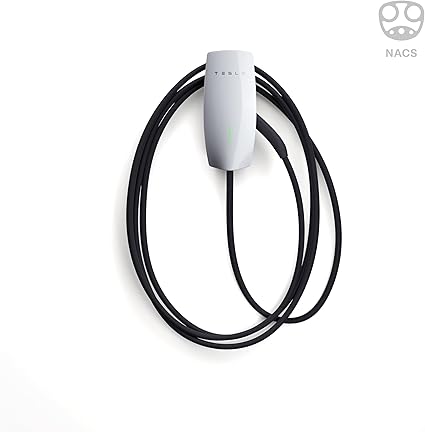
The Tesla Universal Wall Connector brings innovative design and future-proof compatibility to EV charging. Featuring Tesla's unique Magic Dock technology, this charger can accommodate both J1772 and NACS connectors without requiring separate adapters, making it an excellent choice for households with multiple electric vehicles or those planning for future EV purchases.

User Highlights for EV Owners:

  • Power Output: 11.5 kW (48A) 
  • Connector: J1772 & NACS (Magic Dock technology, future-proof)
  • Smart/App Features: Yes (Tesla app integration, scheduling)
  • Installation Types: Hardwired only (professional installation)
  • Weather Rating: Excellent (NEMA 4, all-weather performance)
  • Warranty: 4 years (extended coverage)
  • Price: $620-$850 CAD
  • Charging Time: 9-11 hours (0-100%), 52 minutes (50km range)
  • Special Feature: Tesla Supercharger access for EV starting June 2025

Installation Requirements

The Tesla Universal Wall Connector requires professional hardwired installation on a dedicated 60A circuit. This configuration ensures safe, consistent power delivery and allows the charger to operate at its full 48A capacity, making it suitable for high-capacity electric trucks.

Why Choose the Tesla Universal Wall Connector

This charger is ideal for EV owners who want a premium, future-ready Level 2 home EV charger. Its universal connector support, strong build quality, and long warranty make it an excellent long-term investment as North American charging standards continue to evolve.

Grizzl-E Classic and Smart

Grizzl-E Classic and Smart

The Grizzl-E series represents exceptional Canadian value engineering, offering reliable performance and quality construction at an attractive price point. Available in both Classic and Smart variants, these chargers provide EV owners with flexible options to match their budget and feature requirements. The Smart version adds WiFi connectivity and app control while maintaining the series' reputation for durability and reliability. Built to withstand harsh Canadian conditions and backed by excellent customer support, Grizzl-E chargers offer an ideal balance of performance, features, and value for cost-conscious EV enthusiasts.

User Highlights for EV Owners:

  • Power Output: 9.6 kW (40A) 
  • Connector: J1772 
  • Smart/App Features: No (Classic) / Yes (Smart version with WiFi)
  • Installation Types: Both plug-in and hardwired options available
  • Weather Rating: Excellent (NEMA 4, -30°C to 50°C Canadian tested)
  • Warranty: 3 years standard (5 years optional upgrade)
  • Price: $699-$1200 CAD (exceptional value)
  • Charging Time: 11-14 hours (0-100%), 62 minutes (50km range)

Installation Requirements

The Grizzl-E Classic offer flexible installation to suit different home electrical setups. Both can be installed using a NEMA 14-50 plug or hardwired for a more permanent solution. Hardwired installation is recommended for GMC electric truck owners seeking maximum durability and long-term reliability.

Why Choose Grizzl-E Classic

These chargers are ideal for EV owners who want a Canadian-made Level 2 EV charger built to handle extreme weather conditions. Whether you prefer the no-frills reliability of the Grizzl-E Classic or the added visibility of the Grizzl-E Smart, both models deliver dependable charging performance with strong long-term value.

Portable Level 1 Chargers for Jaguar I-PACE

While a Level 2 charger is the best solution for home charging, a portable Level 1 charger is a valuable tool to have. These chargers plug into any standard 120V outlet, offering a charging option when you're away from home or in an emergency.

The I-PACE comes with a Level 1 cable, which is sufficient to cover an average daily commute of 30 km if charged overnight. While slow, it provides a reliable backup charging method, ensuring you're never left without power.

 
Lectron Level 1 J 1772 (WiFi)
EVDance
Base Energy
Feature
Feature
Lectron Level 1 J 1772 (WiFi)
EVDance
Base Energy
Power Output
Power Output
120V, 12-16A, 1.4-1.9kW
120V/240V, 12-16A adjustable
120V, 12A, 1.4kW
Charge Time for 50km
5.3-7.1 hours
5.3-7.1 hours
7.1 hours
Key Features
Key Features
WiFi Enabled, App Control, Scheduling
Dual Voltage, portable, 25ft cable
UL Listed, reliable, 20ft cord
Price(CAD)
Price(CAD)
$200-$270
$120-$150
$130-$220
Best For
Best For
Smart Features & Convenience
Versatility & Travel
Maximum Reliability

Home EV Charger Installation and Smart Features to Consider

Professional EV Installation Requirements

Installing a Level 2 EV charger is not a DIY project. It requires a licensed electrician to ensure the installation is safe, compliant with the Canadian Electrical Code, and eligible for provincial rebates. A professional will assess your home’s electrical system and perform the necessary work to support the charger.

EV Charger Installation Requirements for Canadian Homes:

  • Dedicated branch circuit: A Level 2 charger requires its own dedicated 240V circuit to handle the continuous power draw.
  • Breaker sizing (125% rule): The circuit breaker must be rated for 125% of the charger's maximum continuous load. For a 48A charger, this means a 60A breaker.
  • Conductor sizing (AWG reference): The wire gauge must be appropriate for the amperage and distance from the electrical panel. Thicker wires (lower AWG number) are needed for higher currents or longer runs.
  • GFCI protection: A ground fault circuit interrupter (GFCI) breaker is typically required to protect against electrical shock.
  • Weatherproof installation (if outdoor): Outdoor installations require weatherproof chargers (NEMA 4 or higher) and appropriate conduits to protect wiring from the elements.

Cost of Charging a Jaguar at Home in Canada

Charging your Jaguar I-PACE at home is significantly more affordable than fueling a gasoline vehicle. The exact cost depends on your provincial electricity rates and how much you drive. With its 90 kWh battery and 377 km range, the I-PACE has an efficiency of about 23.9 kWh per 100 km.

Below are sample costs to fully charge the battery and the cost per 100 km in different provinces.

Sample Charging Costs (90 kWh battery):

  • British Columbia: ~14.1¢/kWh = $3.37 per 100 km
  • Québec (Off-peak): ~7.8¢/kWh = $1.86 per 100 km
  • Ontario: ~14.1¢/kWh = $3.37 per 100 km

By comparison, a comparable luxury gasoline SUV averaging 12 L/100 km would cost around $19.20 per 100 km (at $1.60/L). Charging at home can save you over 80% on your fuel costs, highlighting one of the most significant financial benefits of EV ownership.

Future-Proofing Your Jaguar EV Charging Setup

As you prepare to install a home EV charger, a little foresight can save you time and money in the future, especially as Jaguar's all-electric lineup expands.

Planning Considerations:

  • Install conduit for future upgrades: Even if you're installing a lower-amperage charger now, have your electrician run conduit that can accommodate thicker wiring for a more powerful charger later.
  • Choose an accessible mounting location: Pick a spot in your garage or driveway that will be convenient for any vehicle to access, not just your current one.
  • Select an upgradeable smart charger: Choose a charger that receives over-the-air firmware updates. This ensures it remains compatible with new technologies and utility programs.
  • Plan panel capacity for multiple EVs: If you anticipate owning a second EV in the future, discuss a load management solution or potential panel upgrade with your electrician now.

EV Charger Lifespan and Maintenance

A quality Level 2 EV charger is a durable piece of equipment designed to last for many years. Most chargers have an expected lifespan of 7–10 years and are largely maintenance-free. The most important maintenance task is keeping the unit clean and ensuring the charging cable is not damaged or kinked.

For smart chargers, it's important to install firmware updates as they become available. These updates can improve performance, fix bugs, and add new features. It's also wise to have a qualified electrician periodically inspect the electrical connections to ensure everything remains secure.

Finally, pay close attention to the warranty. A strong warranty (3-5 years) from a reputable manufacturer provides peace of mind and protects your investment.

How to Maximize Your Jaguar Electric Car Experience

Owning a Jaguar EV is about more than just driving; it's about adopting a smarter, more efficient lifestyle. Simple adjustments to your daily habits and an understanding of seasonal effects can help maximize your vehicle’s range and performance.

Daily Charging Habits:

  • Plug in every night: Make it a routine to plug in your I-PACE when you get home. This ensures you always start the day with enough range.
  • Follow the 80/20 rule: For daily driving, charge your battery to 80% to help preserve its long-term health. Only charge to 100% when you need the maximum range for a long trip.
  • Use scheduled charging: Set your charger to run during off-peak hours to take advantage of lower electricity rates.

Seasonal Considerations:

  • Precondition in winter: Use the Jaguar Remote app to precondition (warm) the battery and cabin while the car is still plugged in. This preserves battery energy for driving.
  • Anticipate range reduction: Cold weather reduces EV range. Be mindful of this during Canadian winters and plan your trips accordingly.
  • Use heated seats and steering wheel: These features use less energy than blasting the cabin heater, helping to conserve range in the cold.

Performance Optimization:

  • Drive smoothly: Avoid aggressive acceleration and braking. Smooth driving significantly improves energy efficiency.
  • Use regenerative braking: Take full advantage of the I-PACE's regenerative braking system, which recaptures energy to recharge the battery as you slow down.
  • Check tire pressure: Properly inflated tires reduce rolling resistance and are one of the easiest ways to maximize your vehicle's range.

How to Find the Best EV Charger Installer in Canada

Choosing the right EV installer is just as important as choosing the right charger. A qualified professional ensures your charging station is installed safely, works efficiently, and complies with all local codes and rebate requirements. Don't leave this critical job to an uncertified handyman. The risks are too high.

EV Charger Installer Qualifications:

  • Licensed electrician: The installer must be a licensed electrician in your province, with a certification number you can verify.
  • EV installation experience: Look for electricians who specialize in EV charger installations and have experience with your specific type of home and charger.
  • Permit knowledge: A good installer understands the local permit requirements and will handle the entire application and inspection process for you.
  • Insurance coverage: Ensure the installer has liability insurance and WCB coverage to protect you from any accidents or property damage.

Getting Quotes:

  • Obtain multiple quotes: Contact at least three certified installers to compare pricing and services.
  • Verify permits included: Confirm the quote includes the cost of the electrical permit and all related inspections.
  • Ask about installation warranty: Reputable installers will offer a warranty on their workmanship, separate from the charger's product warranty.

The best way to ensure you get a fair price from a qualified professional is to compare quotes. This allows you to weigh your options and choose an installer you trust.

Prepare Your Home for a Jaguar Electric Car with a Home EV Charger

Making the switch to a Jaguar electric vehicle is an exciting step toward a more sustainable and exhilarating driving future. The final piece of the puzzle is preparing your home to support your new vehicle. Installing a Level 2 home EV charger offers unmatched convenience, significant cost savings, and the reassurance of waking up to a fully charged vehicle every morning.

Let EV Quotes help you find the right professional for the job.
 

Frequently Asked Questions

The best home EV charger for a Jaguar I-PACE is a Level 2 charger with an output of at least 9.6 kW (40A) to take full advantage of the vehicle's 11 kW onboard charger. Models like the Emporia Classic, ChargePoint Home Flex, and Tesla Universal Wall Connector are excellent choices. They provide fast, reliable overnight charging and offer smart features to help you manage energy costs. The ideal choice depends on your budget, desired features, and whether you need a unit rated for extreme Canadian weather.

Yes, you can charge your Jaguar I-PACE using a normal 120V household outlet with the Level 1 charging cable that comes with the vehicle. However, this method is very slow, adding only about 5-7 kilometers of range per hour. It can take over 60 hours to fully charge the 90 kWh battery from empty. While it's convenient for emergencies or occasional top-ups, it is not practical as a primary charging solution for daily driving. A Level 2 charger is strongly recommended for home use.

The breaker size for a Level 2 EV charger depends on the charger's maximum amperage. According to the Canadian Electrical Code, the breaker must be rated for 125% of the charger's continuous load. For example, a 40-amp charger requires a 50-amp breaker (40A x 1.25 = 50A). A 48-amp charger, ideal for the Jaguar I-PACE, requires a 60-amp breaker (48A x 1.25 = 60A). A certified electrician will determine the correct breaker size during the installation process.

The cost to install a Level 2 EV charger in Canada typically ranges from $1,200 to $3,500, including the charger and installation. This cost can vary based on several factors, such as the distance from your electrical panel to the charger, whether your panel needs an upgrade (which can add $1,500-$4,500), and local labor rates. Government rebates in provinces like British Columbia and Quebec can help reduce the final cost. Getting multiple quotes from certified electricians is the best way to determine the exact price for your home.

The 80/20 rule is a best practice for managing your EV's battery health. It suggests charging your battery to 80% for daily use and avoiding letting it drop below 20% regularly. This practice helps reduce stress on the lithium-ion battery cells, which can prolong their lifespan. Most modern EVs and smart chargers allow you to set a charging limit, making it easy to follow this rule. You should only charge to 100% when you need the vehicle's maximum range for a long trip.

Yes, a Level 2 charger is significantly faster than a Level 1 charger. A Level 1 charger uses a 120V outlet and adds about 5-7 km of range per hour. A Level 2 charger uses a 240V circuit and can add 30-50 km of range per hour, depending on the charger's amperage and the vehicle's onboard charger capacity. For a Jaguar I-PACE, a Level 2 charger can provide a full charge overnight in 8-10 hours, while a Level 1 charger would take several days.

With a Level 2 charger, a Jaguar I-PACE can be fully charged from empty in approximately 8-10 hours. This makes overnight charging the most convenient method. Using a Level 1 charger, a full charge could take more than 60 hours, which is impractical for most drivers.

Yes, professional installation by a licensed electrician is strongly recommended and often legally required in Canada for a Level 2 charging station. This ensures the installation is safe, compliant with all electrical codes, and eligible for provincial rebates. Improper installation can be a fire hazard and may void your home insurance.

Yes, several Canadian provinces and municipalities offer rebates to reduce the cost of purchasing and installing a home EV charger. Programs in British Columbia, Quebec, and New Brunswick can provide several hundred dollars in financial assistance. It's important to check for current incentives in your specific region, as these programs change over time.

Yes, quality EV chargers are designed to operate effectively in Canadian winters. Look for chargers with a NEMA 4 rating or higher, which indicates they are sealed against water, snow, and ice. It's also beneficial to use the preconditioning feature in your I-PACE to warm the battery while plugged in, which improves charging efficiency in cold temperatures.

No, DC fast chargers (Level 3) are not suitable for residential installation. They have extremely high power requirements that residential electrical systems cannot support, and cost tens of thousands of dollars. They are designed exclusively for public charging networks along major transportation routes.

Yes, installing a Level 2 EV charger can add value to your home. As electric vehicles become more popular in Canada, a pre-installed charging station is an attractive feature for potential buyers, making your property more appealing and future-ready. It's a modern upgrade that signals a home is equipped for the future of transportation.

A hardwired charger is permanently connected to your home's electrical system, which can offer slightly higher power output and is often considered a cleaner installation. A plug-in charger connects to a 240V outlet (like a NEMA 14-50), offering more flexibility if you want to take the charger with you when you move. Both are safe and effective when installed correctly.

It depends on your current electrical service. Most modern homes with 200-amp service can support a Level 2 charger without issue. However, older homes with 100-amp panels may require an upgrade to handle the additional load, especially if you have other large electric appliances. An electrician must perform a load calculation to determine if an upgrade is needed.

Yes, you can use certain Tesla chargers. The Tesla Universal Wall Connector comes with a built-in J1772 adapter, making it compatible with your Jaguar. For older Tesla Wall Connectors or public Destination Chargers, you would need a separate Tesla-to-J1772 adapter to connect to your I-PACE.

The cost varies by province. In a low-cost province like Quebec, it can be under $2.00 per 100 km when charging at off-peak rates. In a higher-cost province like Alberta, it might be closer to $6.00 per 100 km. In either case, it is significantly cheaper than the equivalent cost of gasoline for a comparable luxury SUV.

Preconditioning allows you to heat or cool your Jaguar's cabin and battery to an optimal temperature while it's still plugged into the charger. This is important because it uses power from the grid instead of draining the battery. In winter, a warm battery accepts a charge more efficiently and provides better range from the start of your drive.

Smart charging features allow you to control and monitor your charging remotely via a smartphone app. Key features include scheduling sessions to use off-peak electricity, tracking energy consumption and costs, and receiving notifications about your charging status. These features help you save money and manage your EV more effectively.

You can find a qualified installer by searching for licensed electricians in your area who have certified experience with EV supply equipment (EVSE). Using a service like EV Quotes can connect you with multiple verified, insured, and experienced installers in Canada, allowing you to compare quotes and select the best professional for the job.

The Jaguar I-PACE includes a Level 2 public and wall box charging cable. This cable connects your vehicle to a home charger or public AC charging point. The Level 1 household plug charging cable is an optional accessory that can be purchased separately.

The Jaguar I-PACE is equipped with a powerful 11 kW onboard charger. This capacity allows it to take full advantage of most Level 2 home chargers, enabling a full charge overnight and ensuring efficient use of public AC charging stations.

Yes, you can install an EV charger outdoors, provided you choose a model with a proper weatherproof rating, such as NEMA 4. The installation must also use weatherproof conduit and fittings to protect the electrical wiring from the elements. This is a common practice for homes without a garage.

Most reputable EV charger manufacturers offer a 3-year warranty on their products. Some brands may offer a longer warranty, such as 5 years, either standard or optional upgrade. It's important to check the warranty details before purchasing, as it covers potential defects in the equipment.

Cold weather can temporarily reduce your EV's range by 15-40%. The energy is used to heat the battery and the cabin, and the chemical reactions inside the battery are less efficient at low temperatures. Using preconditioning while plugged in can help mitigate some of this range loss.

Yes, it is perfectly safe to charge your electric vehicle in the rain or snow. EV chargers, connectors, and vehicle inlets are designed and engineered to be weatherproof and have multiple safety features to prevent electrical shock. The connection is sealed from the elements, and power will not flow until a secure connection is established.

The NEMA (National Electrical Manufacturers Association) rating indicates the level of protection a charger's enclosure provides against environmental elements. A NEMA 3R rating is suitable for outdoor use and protects against falling rain and sleet. A NEMA 4 rating provides higher protection against windblown dust and hose-directed water, making it a better choice for harsh Canadian climates.

Yes, a stable Wi-Fi connection is required to use the smart features of an EV charger, such as remote control, scheduling, and energy monitoring through a smartphone app. If your garage has a weak Wi-Fi signal, you may need to install a Wi-Fi extender to ensure your charger functions correctly.

Yes, you can charge two EVs simultaneously at home. You can either install two separate dedicated circuits and chargers, or use two smart chargers that support load sharing or load management. This feature allows both chargers to share power from a single circuit, automatically adjusting the charging speed for each vehicle.

The SAE J1772 is the standard connector for Level 1 and Level 2 AC charging used by all EV manufacturers in North America, except for Tesla. Your Jaguar I-PACE uses a J1772 inlet for home and public AC charging, ensuring broad compatibility with charging stations across Canada.

A licensed electrician can typically complete a standard EV charger installation in 2 to 4 hours. However, the timeframe can be longer if the installation is complex, requires long lengths of conduit, or if an electrical panel upgrade is necessary.